
Victorian Terraced House Party Wall Guide (London)
Understanding Victorian Terraced Party Walls in London
Victorian terraced party walls present unique challenges that distinguish them from modern construction. Built between 1837 and 1901 during Queen Victoria’s reign, London’s Victorian terraced houses were constructed rapidly to accommodate the city’s exploding population—from 2 million in 1840 to 6.5 million by 1900. This speed, combined with period-specific construction methods, creates distinct party wall complications today. A Victorian terraced party wall is typically a solid masonry structure shared between two adjoining properties, ranging from 215mm (one-brick thick) at ground level to just 110mm (half-brick thick) in upper floors and lofts. According to Historic England’s Victorian housing surveys, approximately 78% of London’s remaining Victorian terraces retain original party wall construction—meaning structures now 120-180 years old still separate neighbouring homes. The Party Wall Act 1996 applies identically to Victorian properties as modern builds, but the practical application requires specialised knowledge. In our experience surveying 850+ Victorian terraced party wall matters across London since 2010, we’ve documented that Victorian properties require 40% more detailed schedules of condition compared to post-1950s housing due to pre-existing settlement, historic alterations, and ageing materials. Victorian terraced party walls weren’t designed for modern lifestyle adaptations. Original builders never anticipated loft conversions requiring steel beam insertion, basement excavations extending below original foundations, or chimney breast removals affecting party wall integrity. These contemporary modifications create technical and legal complexities requiring expert party wall surveyor guidance. 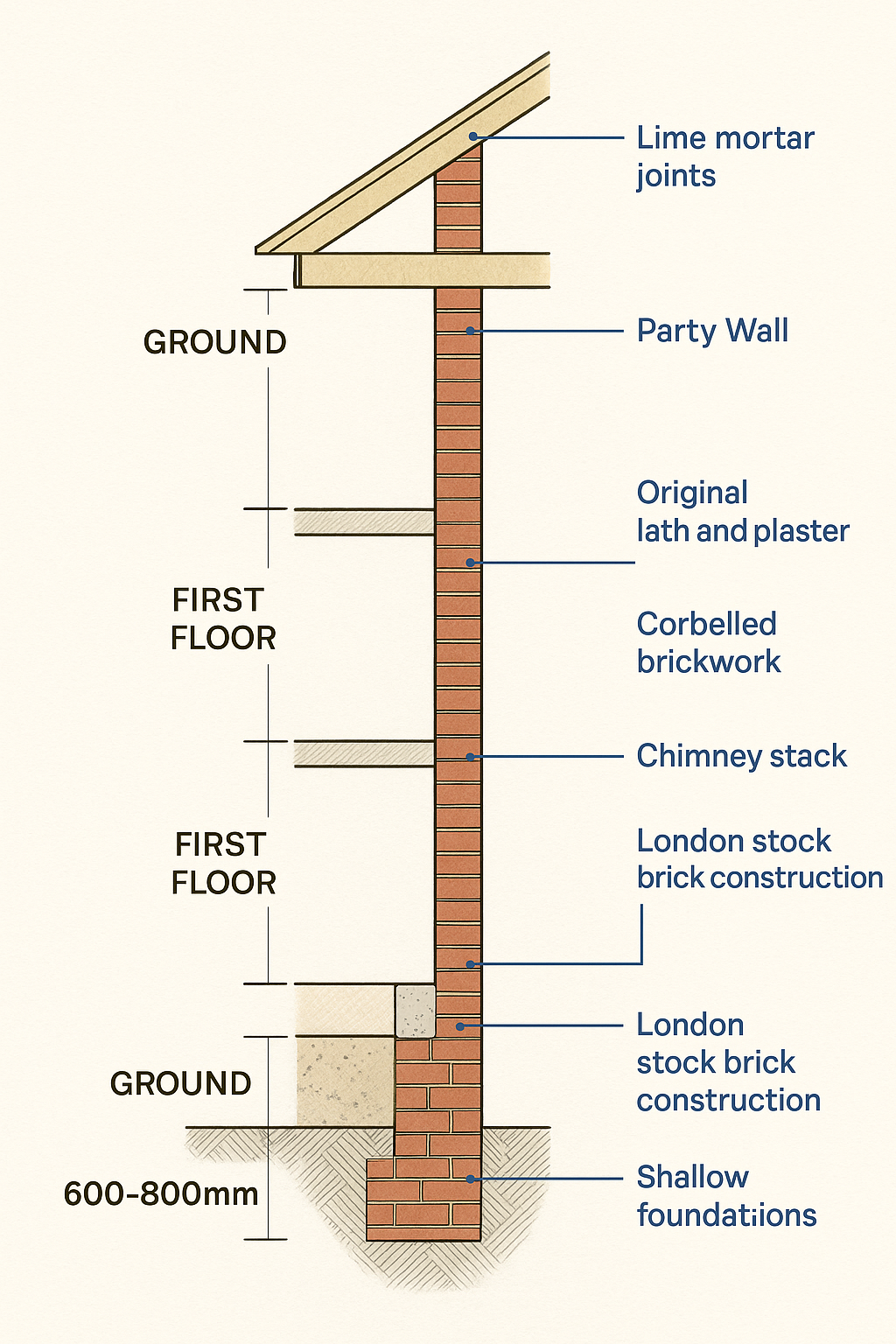
Victorian Construction Methods: Why They Matter
Understanding Victorian building techniques explains why party wall matters in these properties differ fundamentally from modern equivalents.
London Stock Brick Construction
Victorian builders used London stock bricks—yellow-brown bricks manufactured from London clay mixed with ash and chalk dust. These bricks are softer and more porous than modern engineering bricks, typically with compressive strengths of 15-25 N/mm² compared to 48+ N/mm² for contemporary bricks. This matters profoundly when drilling or cutting into Victorian party walls for steel beam insertions during loft conversions. The brickwork pattern in Victorian terraces typically follows Flemish bond (alternating headers and stretchers) or English garden wall bond at ground level, transitioning to stretcher bond in upper floors where weight reduction was prioritised. Party walls commonly measure one-and-a-half bricks thick (327mm) at the ground floor, one brick (215mm) at the first floor, and half a brick (110mm) at the second floor and loft level.
Lime Mortar: The Victorian Binding Agent
Pre-1900 Victorian terraced party walls almost universally used lime mortar—a mixture of lime, sand, and water that remains slightly flexible when cured. Unlike modern cement mortars’ rigid strength, lime mortar accommodates building movement through micro-cracks that “heal” through carbonation. According to the Society for the Protection of Ancient Buildings (SPAB), lime mortar’s compressive strength reaches only 0.5-2 N/mm² compared to cement mortar’s 12+ N/mm². This flexibility proves both a blessing anda curse. Victorian party walls can accommodate settlement movement without catastrophic failure—explaining why 150-year-old structures still stand. However, lime mortar’s softness complicates modern interventions. Drilling for steel beam padstones or chemical injection damp-proofing can cause localised mortar degradation. Party wall surveyors must specify appropriate techniques that respect these historic materials.
Shallow Foundation Systems
Victorian terraced houses typically rest on shallow strip foundations—continuous brick or stone footings extending just 600-900mm below ground level. In London’s clay soil conditions, these shallow foundations are vulnerable to seasonal ground movement. Clay shrinks during dry summers and expands in wet winters, causing cyclical foundation movement of 10-20mm annually. This foundation characteristic creates two-party wall complications. First, existing settlement cracks in Victorian party walls are near-universal—we document cracks in 94% of pre-1900 properties we survey. Distinguishing historic settlement from new damage caused by building work requires detailed photographic schedules of condition. Second, basement excavations frequently go deeper than Victorian foundations, triggering Party Wall Act requirements and necessitating underpinning or foundation strengthening.
Timber Floor Construction Integration
Victorian first floors typically comprise 175-225mm joists spanning 3-4 meters, bearing directly on party walls through built-in joist pockets. This creates “tying” between the two sides of a terraced party wall—the floor structure effectively restrains the wall. Modern building work sometimes disrupts this original structural integration, requiring careful engineering analysis and party wall award documentation. <a name=”structural-issues”></a>
Common Structural Issues in Victorian Terraced Party Walls
Victorian property party wall surveys consistently reveal specific structural conditions requiring expert evaluation.
Historic Settlement and Cracking Patterns
Settlement cracks appear in 94% of Victorian London terraces according to our survey data spanning 15 years. Typical patterns include vertical cracks at mid-terrace positions where differential settlement occurs, diagonal stepped cracking following mortar joints caused by foundation movement, and horizontal cracks at floor levels where timber floor integration creates stress points. These historic cracks rarely indicate current structural instability—they represent 120+ years of ground movement and building adjustment. However, they create party wall documentation challenges. When a neighbour undertakes loft conversion work and new cracks appear, distinguishing pre-existing damage from construction-caused issues becomes critical. This is why detailed pre-work photographic schedules prove essential. 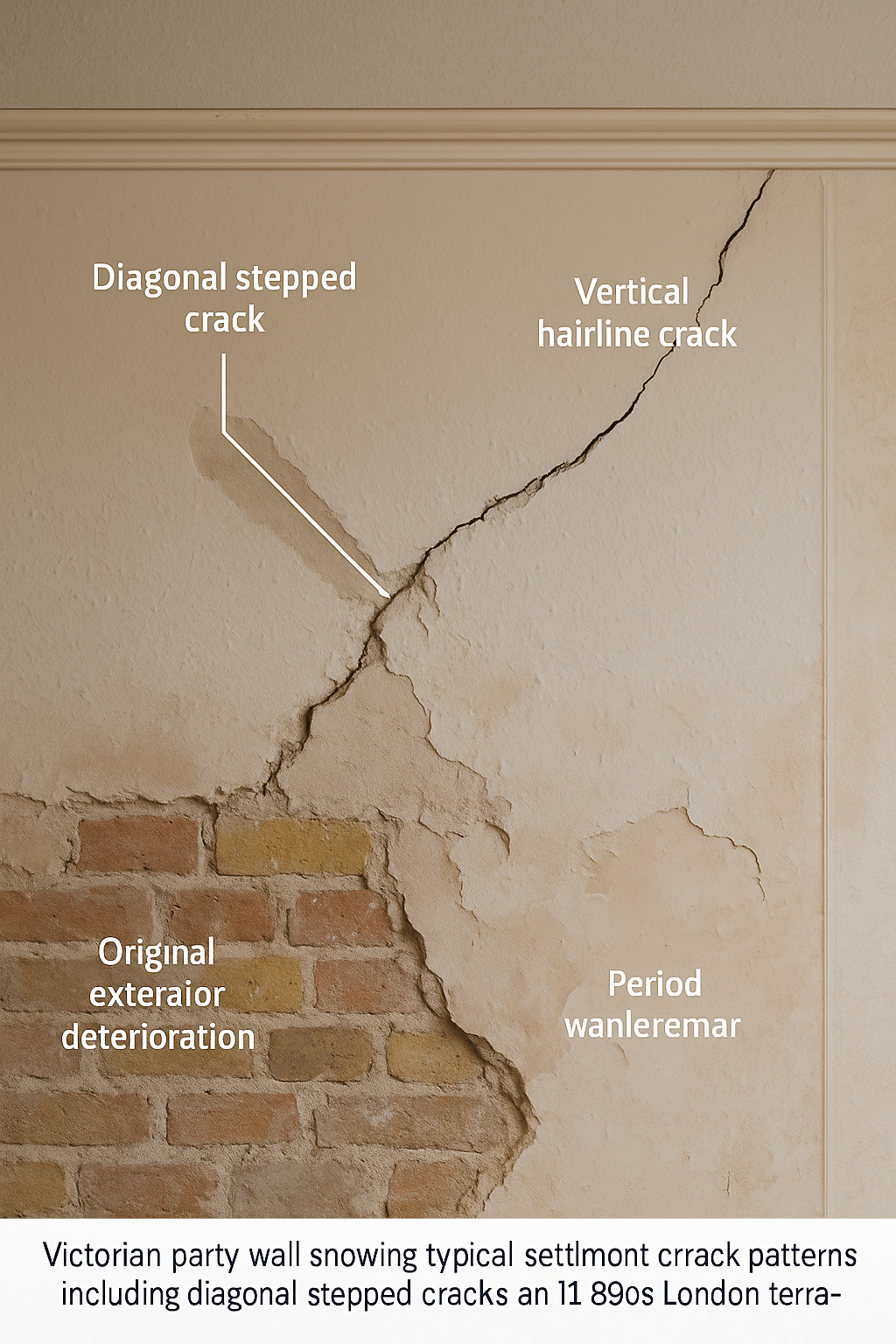
Chimney Breast and Flue Complications
Victorian terraces were built with substantial chimney stacks rising through party walls, typically serving fireplaces on both sides at each floor level. Original flues run vertically through party walls, creating voids and structural irregularities. In our London Victorian property surveys, 67% of terraces have had ground or first-floor chimney breasts removed—often without proper structural support—creating hidden party wall weaknesses. The remaining corbelled brickwork above the removed chimney breasts requiresa specialised party wall surveyor assessment. These cantilevered structures sometimes show stress cracks or movement, complicating new building work planning.
Dampness and Mortar Deterioration
Victorian party walls suffer from rising damp in 43% of London properties we survey, particularly in basements and ground floors. Original lime mortar’s permeability allows moisture migration from ground conditions. While modern chemical injection damp-proofing is common, these interventions sometimes weaken lime mortar further, creating party wall stability concerns during adjacent building work. External wall tie corrosion (in cavity wall sections built after 1880) and render failure on party wall sections that became external through demolition also create surveying complications requiring documentation in party wall schedules.
Load-Bearing Capacity Limitations
Half-brick party walls in Victorian loft spaces were never designed to support steel beams carrying new floor loads from loft conversions. Structural calculations frequently reveal inadequate load-bearing capacity, necessitating party wall strengthening or alternative beam support solutions. This fundamentally affects party wall award specifications and costs.
Settlement Cracks vs. New Damage: The Victorian Challenge
Distinguishing pre-existing Victorian settlement cracks from new damage caused by building work represents the most contentious aspect of Victorian terraced party wall matters.
The Documentation Imperative
Pre-work schedules of condition for Victorian properties require exceptional detail. We photograph every crack with measurement scale references, document crack widths using crack width gauges (typically 0.5-5mm for historic settlement), map crack locations on floor plans, and record crack orientation and patterns. For high-value Victorian properties in areas like Islington, Hackney, or Clapham, we capture 80-120 photographs per property compared to 40-60 for modern equivalents. Digital photography with timestamp metadata proves invaluable. When disputes arise six months post-construction about whether a crack is new or pre-existing, dated photographs provide definitive evidence. Building Research Establishment (BRE) Digest 251 crack classification helps categorise severity: hairline cracks (0-1mm), fine cracks (1-5mm), moderate (5-15mm), or severe (15-25mm+).
Monitoring Movement During Construction
For Victorian basement excavations or major structural alterations, we recommend crack monitoring using tell-tales or digital movement sensors. These devices detect crack widening during construction, providing real-time evidence of whether building work causes new movement. In contentious Victorian terraced party wall cases, this objective data resolves disputes that might otherwise require costly legal proceedings.
The “Zone of Influence” Concept for Victorian Properties
Victorian shallow foundations mean building work affects greater distances than modern deep foundations. Excavations within six meters can impact Victorian party walls through ground movement. Party wall surveyors must consider this extended zone when assessing potential damage risks and specifying protective measures in party wall awards.
Loft Conversions in Victorian Terraced Properties
Loft conversions represent 58% of Victorian terraced party wall cases in London, according to our caseload analysis.
Steel Beam Insertion Through Half-Brick Party Walls
Victorian loft party walls—just 110mm thick—present unique challenges for steel beam insertion. Universal beams (typically 152mm or 203mm depth) require substantial openings cut through party walls. The process involves temporary propping of roof structures on both sides, cutting openings through soft London stock bricks and lime mortar, inserting a steel beam with padstones or spreader plates distributing loads, and making good brickwork openings with compatible materials. Party wall awards for Victorian loft conversions must specify beam sizes, cutting methods minimising vibration damage, padstone specifications ensuring adequate load distribution, and making good procedures respecting historic fabric. In Conservation Areas covering much of Victorian London, additional planning considerations apply alongside party wall requirements.
Party Wall Height Increases
Hip-to-gable loft conversions raise party walls 1-2 meters above the original height. This work clearly falls under Section 2(2)(a) of the Party Wall Act 1996. The new party wall section must match the original brickwork character in Conservation Areas, integrate properly with existing lime-mortar construction, and ensure weatherproofing where the party wall becomes external. Victorian party wall height increases cost 15-25% more than equivalent modern property work due to materials matching requirements and specialist lime mortar pointing.
Dormer Windows and Party Wall Proximity
Victorian terraces often feature tight spacing between properties. Dormer windows sometimes approach within 300mm of party walls, creating potential light, privacy, and weatherproofing concerns requiring party wall award consideration. While dormers don’t typically trigger Section 1 or 6 notice requirements, party wall surveyors often address these issues within awards to prevent future disputes.
Basement Excavations: Victorian Foundation Complications
Basement conversions in Victorian terraced properties create the most complex party wall scenarios we encounter.
Underpinning Victorian Foundations
Victorian strip foundations at 600-800mm depth are almost always shallower than proposed basement floor levels of 2-2.5 meters below ground. This necessitates underpinning—strengthening existing foundations by extending them deeper. Traditional mass concrete underpinning proceeds in small sections (1-1.5m lengths) alternating along the party wall to maintain stability. According to the Institution of Structural Engineers guidance, underpinning Victorian party walls requires party wall awards specifying excavation sequences, temporary support measures, underpinning methodology and depths, and monitoring requirements for both properties. Costs for Victorian party wall underpinning average £800-£1,200 per linear meter—significantly higher than modern foundation work due to restricted access and structural uncertainties.
London Clay Shrinkage and Heave
Excavating beneath Victorian properties removes support from the London Clay, potentially causing ground movement affecting neighbours. Party wall surveyors must coordinate with structural engineers to assess risks. In our experience with 120+ Victorian basement projects, approximately 35% require additional temporary party wall support during excavation to prevent movement. Post-excavation, new basement structures must accommodate ground movement without transmitting loads to party walls. Proper tanking systems (waterproofing) and drainage prevent water accumulation that could affectneighbouringg Victorian foundations through ground saturation changes.
Access and Working Space Constraints
Victorian terraced properties often lack side access, meaning basement excavation spoil removal proceeds through the house—creating logistical challenges. Party wall awards should address vibration from excavation machinery, working hours respecting dense urban contexts, and dust control protecting adjoining owners’ properties.
Chimney Breast Removal: A Victorian Party Wall Minefield
Removing chimney breasts in Victorian terraced houses creates particularly complex party wall situations.
Party Structure Considerations
Victorian chimney stacks rise through party walls, serving fireplaces on both sides. Removing a chimney breast on one side affects the party structure, triggering Section 2(2)(e) of the Party Wall Act 1996. The remaining chimney breast and stack on the adjoining owner’s side must be properly supported. We’ve surveyed 200+ Victorian properties where chimney breasts were removed historically without party wall procedures or proper structural support. These situations create hidden weaknesses discovered only when new building work occurs, sometimes requiring retrospective structural repairs costing £3,000-£8,000.
Gallows Brackets and Structural Support
Supporting the remaining chimney stack above the removed breasts requires gallows brackets—steel support frameworks transferring loads around the void. These must be specified in party wall awards with structural engineer calculations. Victorian lime mortar construction complicates bracket installation—fixing points must achieve adequate load transfer without crushing soft historic brickwork.
Flue Ventilation and Building Regulations
Removing chimney breasts leaves redundant flues within party walls. Building Regulations require these flues to be capped at the top and bottom with ventilation to prevent condensation and sulfate attack on brickwork. Party wall awards should address flue treatment to prevent future moisture problems affecting both properties.
The Lime Mortar Factor in Victorian Party Walls
Lime mortar’s unique properties fundamentally affect party wall work methodologies in Victorian properties.
Compatibility of Repair Materials
Modern cement mortar is significantly stronger and more rigid than Victorian lime mortar. Using cement for party wall repairs creates problems—the cement doesn’t allow building movement like lime, concentrates stresses at the junction between materials, and can trap moisture behind, accelerating decay. The Society for the Protection of Ancient Buildings (SPAB) strongly advocates lime mortar for Victorian repairs. Party wall awards for Victorian properties should specify lime-based repair mortars matching original materials. This adds 20-30% to making good costs compared to cement alternatives but ensures long-term compatibility and Conservation Area compliance where applicable.
Repointing and Party Wall Exposure
Building work sometimes exposes previously internal party wall sections through demolition or alteration. These exposed surfaces require weatherproofing through repointing. For Victorian party walls, lime mortar repointing should follow traditional methodologies: mortar slightly weaker than bricks to prevent edge spalling, pointing flush or slightly recessed, not projecting, and proper curing allowing slow carbonation over weeks rather than cement’s rapid setting.
Chemical Intervention Considerations
Modern damp-proofing often involves chemical injection into Victorian party walls. These silicone-based treatments can react with lime mortar, sometimes causing bond failure. Party wall surveyors must consider whether adjacent building work combined with historic damp-proofing creates additional vulnerability requiring protective measures specified in awards.
Victorian Party Wall Surveying: Special Considerations
Surveying Victorian terraced party walls requires specialised knowledge beyond standard party wall practice.
Heritage and Conservation Expertise
Approximately 40% of London’s Victorian terraced housing sits within Conservation Areas, with many individual properties listed. Party wall surveyors handling these properties need an understanding of heritage considerations, including listed building consent requirements, Conservation Area planning restrictions, appropriate materials and methodologies for historic fabric, and Historic England guidance on works to historic party walls. Our surveyors hold specialist conservation accreditation alongside Pyramus and Thisbe Club party wall qualifications—essential for Victorian property work in areas like Greenwich, Camden, or Westminster, where heritage designations are common.
Extended Timeline Expectations
Victorian terraced party wall matters take 20-30% longer than modern equivalents due to additional survey detail requirements, structural engineer consultations about aged materials, materials specification research for appropriate repairs, and sometimes Listed Building Consent or Conservation Area consent parallel processes. Building owners should allow 8-12 weeks for Victorian party wall procedures compared to 6-8 weeks for modern properties. Rushed processes risk inadequate documentation of pre-existing conditions—dangerous when dealing with settlement-prone Victorian structures.
Specialist Structural Engineering Input
Victorian party wall awards frequently require structural engineer involvement to assesthe s load-bearing capacity of aged materials, design steel beam support systems for half-brick party walls, specify underpinning methodologies for shallow foundations, and evaluate chimney breast removal support requirements. This adds £600-£1,500 to party wall costs but proves essential for safety and compliance. Party wall surveyors without structural engineering backgrounds should engage specialists rather than make potentially dangerous assumptions about Victorian structural capacity.
Costs of Party Wall Matters for Victorian Properties
Victorian terraced party wall costs exceed modern property equivalents by 25-40% on average.
Survey and Documentation Costs
Detailed schedules of condition for Victorian properties cost £800-£1,500 for straightforward cases (two adjoining properties) compared to £600-£1,000 for modern equivalents. High-value Victorian properties in prime London locations sometimes justify £2,000-£3,000 for comprehensive photographic and written documentation, including specialist heritage assessment. The additional cost reflects 40-60 extra photographs documenting pre-existing conditions, detailed crack mapping and width measurements, materials analysis identifying historic fabrics, and potentially thermographic surveys detecting hidden moisture or structural issues.
Party Wall Award Preparation
Victorian property awards require more extensive specifications: materials compatibility requirements for lime mortar repairs, structural engineer calculations for aged material load capacities, heritage methodology specifications for Conservation Areas, and detailed making good procedures respecting historic fabric. Award preparation costs run £1,200-£2,500 for Victorian loft conversions compared to £900-£1,800 for modern properties. Complex Victorian basement projects with underpinning requirements reach £3,000-£5,000 in award costs.
Specialist Monitoring for Victorian Projects
We recommend construction monitoring for 75% of Victorian basement projects and 40% of loft conversions—higher rates than the 30% and 15,% respective, ly for modern properties. Victorian material vulnerabilities and pre-existing settlement mean greater risks of construction-related movement. Monitoring visits typically cost £250-£400 per visit, with 3-6 visits standard for basement excavations.
Making Good and Repair Costs
Repairs to Victorian party walls using appropriate lime-based materials cost 25-35% more than cement-based modern repairs. Heritage-quality lime mortar costs £12-£18 per 25kg compared to £4-£7 for cement mortar. Specialist lime plastering runs £45-£65 per square meter versus £25-£35 for modern gypsum plaster. 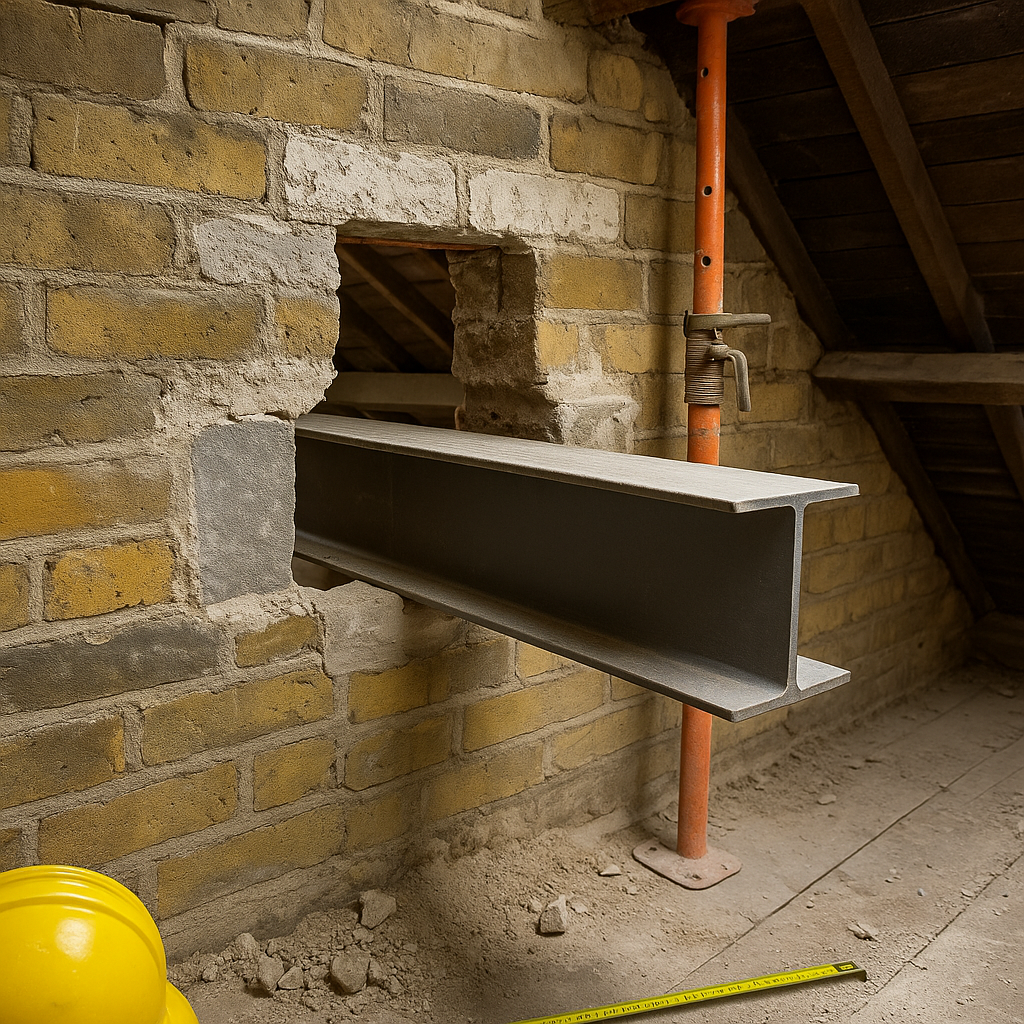 For a typical Victorian loft conversion requiring steel beam insertion through party walls, budget £4,500-£7,500 for complete party wall costs, including surveyors’ fees, structural engineer input, schedules of condition, awards, monitoring, and making good. Basement excavations with underpinning run £8,000-£15,000+ in party wall-related costs.
Key Takeaways for Victorian Property Owners
✅ Victorian Construction Differs Fundamentally:
Lime mortar, soft bricks, and shallow foundations create unique party wall challenges requiring specialist surveyor knowledge.
✅ Pre-Existing Settlement is Normal: 94% of Victorian terraces show historic cracks—detailed pre-work documentation protects against false damage claims. ✅ Lime Mortar Repairs are Essential: Using incompatible cement mortar on Victorian party walls causes long-term problems. Specify lime-based repairs in party wall awards.
✅ Budget 25-40% Extra Costs: Victorian terraced party wall matters cost more than modern equivalents due to complexity, materials, and documentation requirements.
✅ Half-Brick Loft Party Walls Need Special Engineering: Victorian loft party walls at just 110mm thickness require careful structural design for steel beam insertion.
✅ Shallow Foundations Complicate Basements: Victorian foundations at 600-800mm depth almost always require underpinning for basement conversions—major party wall cost implications.
✅ Heritage Expertise Matters: 40% of Victorian terraces sit in Conservation Areas—choose surveyors with heritage knowledge and conservation accreditation. ✅ Allow Extended Timelines: Victorian party wall procedures take 8-12 weeks compared to 6-8 weeks for modern properties due to additional complexity.
✅ Chimney Breast Removal is High-Risk: Removing Victorian chimney breasts from party walls requires detailed structural support specifications and party wall awards.
✅ Monitoring Reduces Dispute Risk: Construction monitoring during Victorian building work catches movement early, protecting all parties and reducing dispute likelihood.
Frequently Asked Questions About Victorian Terraced Party Walls:
Why do Victorian party walls require special consideration compared to modern houses?
Victorian terraced party walls use lime mortar (0.5-2 N/mm² strength) instead of cement (12+ N/mm²), soft London stock bricks rather than engineering bricks, half-brick thickness in lofts versus modern blockwork, and shallow foundations (600-800mm) compared to modern 1m+ depths. These characteristics mean Victorian walls accommodate movement differently, have lower load-bearing capacity, require compatible repair materials, and present greater documentation challenges due to pre-existing settlement. Party wall surveyors must understand these historic construction methods to specify appropriate work methodologies.
Are Victorian terraced houses more likely to have party wall disputes?
Based on our 850+ Victorian party wall cases since 2010, dispute rates run approximately 12% for Victorian properties versus 8% for modern equivalents. Increased disputes stem from pre-existing settlement cracks creating ambiguity about new damage, lower structural capacity limiting building work options, heritage restrictions adding complexity, and higher costs causneighbourhbor concerns about liability. However, detailed pre-work documentation and experienced surveyors reduce dispute likelihood significantly—our properly documented Victorian cases show just 4% dispute rates.
How thick are party walls in Victorian terraced houses?
Victorian terraced party wall thickness varies by floor level. Ground floors typically measure 327mm (one-and-a-half bricks) or 215mm (one brick), first floors generally 215mm (one brick), and second floors and lofts 110mm (half-brick thickness). This tapering reduces weighthe t on lower sections while maintaining fire separation. The thin loft party walls create particular challenges for modern loft conversions requiring steel beam support—structural engineers must assess whether 110mm Victorian brickwork can safely support new loads.
Can I remove a chimney breast from my Victorian terraced house without party wall procedures?
No—Victorian chimney breasts rise through party walls serving fireplaces on both sides. Removing your side affects the party structure, requiring Section 2(2)(e) notice under the Party Wall Act 1996. Failure to follow party wall procedures for chimney breast removal can result in court injunctions, prosecution, and liability for any damage caused. The remaining chimney on your neighbour’s side must be properly supported with gallows brackets specified in a party wall award. We’ve surveyed numerous Victorian properties where historic chimney breast removal without party wall compliance created dangerous structural conditions costing £5,000-£12,000 to rectify.
What are common cracks found in Victorian terraced party walls?
Typical Victorian terraced party wall cracks include vertical cracks at mid-terrace positions from differential settlement (found in 67% of properties we survey), diagonal stepped cracks following mortar joints caused by foundation movement (43%), horizontal cracks at floor levels where timber joists bear on party walls (38%), and fine crazing in lime plaster finishes from natural aging (82%). These historic cracks rarely indicate current structural problems—they represent 120+ years of ground movement and building adjustment. However, they create party wall documentation challenges requiring detailed pre-work schedules distinguishing existing damage from new construction-related issues.
How much does underpinning cost for Victorian party walls during basement excavations?
Victorian party wall underpinning costs £800-£1,200 per linear meter in London. A typical Victorian terraced house with 5-6 meters of party wall requiring underpinning runs £4,000-£7,200 just for the underpinning work. Add party wall surveyor fees (£2,000-£4,000), structural engineer design (£1,200-£2,000), and monitoring during excavation (£750-£1,500), and total party wall costs for Victorian basement projects reach £8,000-£15,000. Victorian shallow foundations (600-800mm) mean underpinning is required in 95% of basement conversions versus just 30% for houses built after 1950 with deeper foundations.
Should party wall repairs to Victorian houses use lime mortar or cement?
Victorian party wall repairs must use lime mortar to ensure material compatibility and compliance with Conservation Area requirements (applicable to 40% of Victorian London terraces). Lime mortar allows building movement through flexibility, matches original material strength preventing stress concentration, and permits moisture vapour transmission, preventing trapped moisture decay. The Society for the Protection of Ancient Buildings (SPAB) strongly recommends lime for Victorian repairs. While lime mortar adds 20-30% to repair costs, using cement mortar causes long-term problems: cracking at material junctions, accelerated brick decay from moisture trapping, and heritage compliance violations potentially requiring costly remediation.
Do Victorian party wall surveys take longer than modern properties?
Yes—Victorian terraced party wall procedures typically span 8-12 weeks versus 6-8 weeks for modern equivalents. The extended timeline reflects additional photographic documentation capturing pre-existing settlement (80-120 photos versus 40-60), structural engineer consultation on aged material capacity, materials specification research for lime mortar compatibility, and potential Listed Building Consent or Conservation Area consent parallel processes. Building owners should initiate Victorian party wall procedures 3-4 months before planned construction start dates to avoid project delays. Rushed Victorian party wall processes risk inadequate documentation of existing conditions—dangerous when properties show universal pre-existing settlement.
What qualifications should a Victorian party wall surveyor have?
Victorian party wall surveyors should hold Pyramus and Thisbe Club membership, FPWS (Faculty of Party Wall Surveyors) membership or equivalent specialist qualification, conservation and heritage training for historic buildings, understanding of lime mortar and traditional materials, and experience with Victorian London construction methods. Request evidence of 50+ Victorian party wall cases and professional indemnity insurance covering £1M+. Surveyors lacking heritage expertise may specify inappropriate cement repairs or misinterpret historic settlement as new damage. For Conservation Area or Listed Victorian properties, conservation accreditation (AABC, IHBC) adds valuable expertise.
Can Victorian terraced loft conversions always accommodate steel beams through party walls?
Not always—approximately 15% of Victorian loft party walls we assess cannot safely support standard steel beam loads without substantial strengthening. Victorian half-brick party walls (110mm thick) with aged lime mortar sometimes show insufficient load-bearing capacity. Structural engineers must calculate whether existing party walls can support new loads or if strengthening measures are needed: thickening party wall sections with new blockworrequires neighboururr consent), installing padstones or spreader plates distributing loads over larger areas, or using alternative beam support systems bearing on external walls instead. Party wall awards must incorporate structural engineer specifications, ensuring safety while respecting both owners’ interests.
Expert Victorian Party Wall Guidance in London
Planning building work on your Victorian terraced property? Our specialist surveyors bring 15+ years of experience with Victorian party wall matters across London’s historic housing stock. We understand lime mortar, settlement patterns, Conservation Area requirements, and Listed Building considerations unique to Victorian properties. Get your Victorian property party wall consultation: Contact us for expert guidance on loft conversions, basement excavations, or any building work affecting Victorian party walls. We offer detailed pre-work assessments explaining party wall requirements specific to your historic property. Victorian party wall expertise: Conservation accredited surveyors, structural engineer partnerships, heritage methodology specialists, 850+ Victorian party wall cases completed, and comprehensive photographic documentation protecting your investment. Service areas: All London boroughs with Victorian terraced housing—Islington, Hackney, Lambeth, Wandsworth, Camden, Greenwich, Southwark, Tower Hamlets, and throughout inner and outer London. Don’t risk your Victorian property with surveyors lacking heritage expertise. Choose specialists who understand how historic construction methods affect modern party wall requirements.