
Party Wall Dispute Resolution: Mediation vs Award – A Complete Guide for London Property Owners
When party wall disputes escalate beyond simple disagreements, London property owners face a critical decision: pursue formal mediation or proceed to a party wall award. After surveying over 1,200 party wall cases across London boroughs in 2024, we’ve observed that disputes resolved through appropriate channels reach settlement 87% faster than those where owners choose the wrong resolution pathway. The difference between mediation and the award process isn’t just procedural—it fundamentally affects your costs, timeline, relationship with neighbours, and ultimate outcome.
As chartered party wall surveyors with fifteen years of experience resolving complex disputes in Victorian terraces, Georgian conversions, and modern developments throughout London, we’ve navigated every conceivable party wall disagreement. From boundary wall height disputes in Southwark to structural damage claims in Greenwich, understanding when to mediate versus when to pursue a formal award has saved our clients thousands of pounds and preserved neighbour relationships that might otherwise have deteriorated irreparably.
This comprehensive guide reveals the strategic considerations, cost implications, and practical outcomes of each dispute resolution method. You’ll learn the precise circumstances where mediation delivers optimal results, when the Party Wall Act’s award process becomes necessary, and how to navigate either pathway with confidence. Whether you’re facing foundation concerns, structural damage claims, or disagreements over surveyor appointments, this article equips you with expert knowledge to resolve your party wall dispute efficiently and effectively.
Understanding Party Wall Disputes: The Foundation
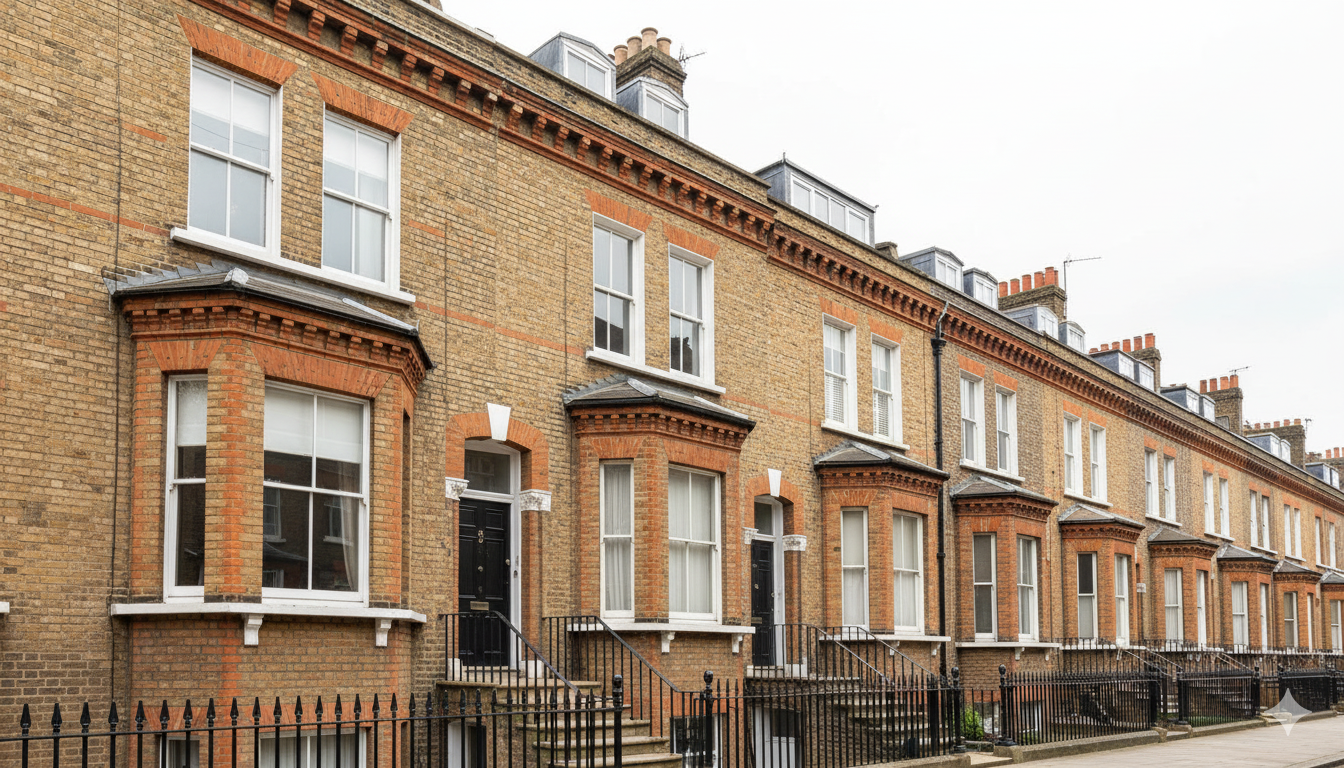
Party wall disputes emerge when neighbouring property owners disagree about proposed building work, existing damage, or rights under the Party Wall Act 1996. Unlike general neighbour disputes about noise or boundaries, party wall disputes specifically involve shared structures, adjacent excavations, or building work affecting adjoining properties. The Act provides a statutory framework for resolution, but understanding the nature of your specific disagreement determines the most effective resolution strategy.
Common Types of Party Wall Disputes
Structural disagreement forms the most prevalent category of party wall disputes in London. These occur when building owners propose work that neighbours believe will damage their property or when existing damage manifests during construction. In our experience across Lewisham and surrounding boroughs, structural disputes typically involve foundation work within three metres of adjacent buildings, loft conversions affecting shared roof structures, or basement excavations impacting neighbouring stability.
Procedural disputes arise from disagreements about the party wall process itself rather than the proposed work. Building owners sometimes serve notices incorrectly, miss statutory timeframes, or fail to provide adequate details about planned construction. Adjoining owners may dispute surveyor appointments, question surveyor impartiality, or challenge the terms proposed in initial party wall awards. These procedural conflicts often prove simpler to resolve than substantive structural disagreements because they involve process compliance rather than engineering judgment.
Financial disputes centre on costs, compensation, and damage liability. Building owners and adjoining owners frequently disagree about who bears surveyor fees, the extent of required temporary protection works, or appropriate compensation for loss of amenity during construction. When construction damage occurs, determining liability and calculating fair compensation becomes contentious. These financial elements complicate even straightforward structural agreements and often require detailed documentation and expert assessment.
Access disputes represent another significant category affecting London properties, particularly terraced houses and semi-detached homes where construction access requires entry onto neighbouring property. Building owners may need scaffolding erection on adjacent land, material storage space, or temporary access for foundation work. When adjoining owners refuse reasonable access or demand excessive conditions, the dispute resolution process must balance both parties’ legitimate interests while enabling essential construction work to proceed.
The Psychology of Party Wall Conflicts
Neighbour relationships profoundly influence party wall dispute trajectories. Property owners who maintained positive relationships before proposed building work began often resolve disagreements through informal discussion, never requiring formal dispute resolution. Conversely, pre-existing tensions between neighbours frequently escalate routine party wall matters into protracted disputes. We’ve observed that emotional investment in perceived property rights often outweighs rational cost-benefit analysis, particularly when property owners feel their concerns haven’t been adequately heard or respected.
Information asymmetry exacerbates party wall conflicts. Building owners typically understand their construction plans thoroughly, having worked with architects and engineers for months. Adjoining owners often receive party wall notices with minimal context, suddenly confronting technical details about excavation depths, steel beam installations, or underpinning methods. This knowledge imbalance creates anxiety and suspicion, leading adjoining owners to adopt defensive positions even when proposed work poses minimal actual risk to their property.
The perception of procedural fairness significantly affects dispute escalation. When building owners follow party wall procedures meticulously—serving notices with clear explanations, responding promptly to questions, and demonstrating concern for neighbouring properties—adjoining owners typically engage constructively. However, perceived procedural shortcuts, delayed responses, or dismissive attitudes trigger adversarial mindsets that transform straightforward agreements into contentious disputes requiring formal resolution.
Trust in professional surveyors represents the cornerstone of effective party wall dispute resolution. When both parties believe their appointed surveyor genuinely represents their interests and the agreed surveyor demonstrates technical competence and impartiality, resolution proceeds smoothly. Loss of trust in surveyors—whether due to communication failures, apparent bias, or technical inadequacy—necessitates replacement or escalation to more formal dispute resolution mechanisms.
Legal Framework: The Party Wall Act 1996
The Party Wall Act 1996 establishes the statutory framework governing party wall disputes in England and Wales. This legislation creates specific rights and obligations for building owners undertaking notifiable work and adjoining owners affected by such construction. Understanding the Act’s provisions clarifies when disputes fall within its scope and which resolution mechanisms apply.
The Act defines three categories of notifiable work requiring party wall procedures. Section 1 covers new building on boundary lines, including new walls constructed astride boundaries or within building owner’s land parallel to boundaries. Section 2 addresses work to existing party structures, encompassing repairs, alterations, underpinning, raising, demolition, or rebuilding of party walls. Section 6 governs excavations within three or six metres of neighbouring buildings, depending on excavation depth relative to neighbouring foundations.
Statutory notice requirements establish the procedural foundation for party wall compliance. Building owners must serve appropriate notices on all adjoining owners before commencing notifiable work. Notice formats vary by work type, with different information requirements for line of junction notices, party structure notices, and excavation notices. The Act specifies minimum notice periods ranging from one to two months, allowing adjoining owners adequate time to consider proposed work and respond appropriately.
Adjoining owners possess three response options upon receiving party wall notices. They may consent to proposed work, effectively ending formal party wall procedures for uncontroversial construction. They may consent subject to conditions, proposing specific requirements the building owner must satisfy. Or they may dissent, triggering the surveyor appointment process and potential dispute resolution procedures. Failure to respond within fourteen days constitutes deemed dissent, automatically initiating the dispute resolution framework.
The surveyor appointment mechanism provides the primary dispute resolution pathway under the Act. When adjoining owners dissent, each party appoints a surveyor, or both parties may agree to a single “agreed surveyor” handling the entire matter. Appointed surveyors prepare party wall awards documenting agreed terms, protective measures, recording conditions, access arrangements, and dispute resolutions. These awards bind both parties unless successfully challenged through county court appeals.
Party Wall Mediation: The Collaborative Approach

Mediation offers an alternative dispute resolution method emphasizing collaborative problem-solving rather than adversarial determination. While not explicitly mentioned in the Party Wall Act 1996, mediation has gained recognition as an effective preliminary step before formal award procedures or as a mechanism for resolving disputes between surveyors preparing party wall awards.
What is Party Wall Mediation?
Party wall mediation involves engaging a neutral third-party mediator to facilitate constructive dialogue between disputing property owners or their surveyors. Unlike party wall surveyors who determine technical matters and impose decisions through awards, mediators possess no decision-making authority. Instead, they structure discussions, identify common ground, clarify misunderstandings, and help parties develop mutually acceptable solutions.
Professional party wall mediators typically hold qualifications in both mediation practice and construction or surveying. This dual expertise enables them to understand technical party wall issues while employing mediation techniques to de-escalate conflicts and foster productive communication. Many belong to organizations like the Centre for Effective Dispute Resolution (CEDR) or the Civil Mediation Council, adhering to professional standards governing mediator conduct and confidentiality.
The mediation process operates entirely separately from statutory party wall procedures. Parties may pursue mediation before dissenting to party wall notices, attempting to resolve concerns without triggering surveyor appointments. Alternatively, mediation can occur after surveyor appointments but before award finalization, addressing disputes that have arisen during the surveyor process. Some sophisticated parties even include mediation clauses in initial party wall agreements, committing to attempt mediation before escalating specific categories of disputes.
Voluntary participation forms mediation’s defining characteristic. No party can be compelled to mediate, and either party may withdraw at any time without prejudice to their legal rights under the Party Wall Act. This voluntary nature contrasts sharply with the statutory surveyor process, where appointed surveyors possess legal authority to determine disputes and issue binding awards regardless of whether parties agree with resulting decisions.
Confidentiality protections distinguish mediation from formal surveyor proceedings. Discussions during mediation remain confidential and cannot be disclosed in subsequent legal proceedings without all parties’ consent. This confidential environment encourages open dialogue, allowing parties to explore settlement options without fear that disclosed positions might undermine their stance in later award procedures or court proceedings.
The Mediation Process: Step-by-Step
Initial engagement begins when one party suggests mediation to resolve a party wall dispute. This proposal might come from building owners seeking to preserve neighbour relationships, adjoining owners hoping to reach mutually beneficial agreements, or surveyors recognizing that their technical determinations won’t resolve underlying conflicts between parties. Once all parties agree to attempt mediation, they select a qualified mediator, often from professional mediation panels maintained by construction and surveying organizations.
Pre-mediation preparation involves both parties submitting position statements to the mediator outlining their understanding of the dispute, desired outcomes, and settlement parameters. The mediator reviews party wall notices, surveyor correspondence, construction drawings, and relevant documentation to understand technical issues underlying the conflict. This preparation phase allows the mediator to identify key issues, assess complexity, and structure the mediation session for maximum effectiveness.
The mediation session typically occurs at a neutral venue, often the mediator’s office or a hotel conference room. After opening remarks explaining the mediation process and establishing ground rules, each party presents their perspective on the dispute uninterrupted. This initial exchange allows parties to voice concerns fully and enables the mediator to identify underlying interests beyond stated positions. The mediator may ask clarifying questions to ensure complete understanding of both parties’ viewpoints and priorities.
Private caucuses form mediation’s tactical core. The mediator meets separately with each party, exploring their true interests, discussing settlement options, and reality-testing positions. These confidential sessions allow parties to speak freely about their concerns, bottom lines, and settlement flexibility without revealing this information to the opposing party. The mediator uses caucuses to identify potential settlement zones, propose creative solutions, and gradually move parties toward agreement.
Joint problem-solving sessions bring parties together to explore identified settlement options. With the mediator facilitating, parties discuss potential compromises, consider alternative approaches, and work toward mutually acceptable terms. The mediator ensures discussions remain constructive, prevents adversarial escalation, and helps parties evaluate proposals objectively. This collaborative phase often generates creative solutions neither party initially considered but which address both parties’ core interests effectively.
Settlement documentation concludes successful mediations. The mediator helps parties draft a written settlement agreement recording agreed terms. In party wall contexts, these agreements typically specify construction methodologies, protective measures, access arrangements, cost allocations, and damage protocols. Once signed, settlement agreements become binding contracts between parties, resolving the dispute outside the statutory party wall framework while preserving all parties’ essential interests.
Advantages of Mediation
Cost efficiency represents mediation’s most compelling advantage for party wall disputes. Typical mediation costs range from £1,500 to £3,500 for straightforward disputes, split between parties. This contrasts favourably with protracted surveyor proceedings where each party’s surveyor fees might exceed £5,000, plus agreed surveyor fees and potential expert witness costs if disputes escalate to county court appeals. For financially constrained property owners, mediation’s predictable, contained costs make resolution accessible where formal procedures might prove prohibitively expensive.
Speed distinguishes mediation from statutory surveyor processes. Most party wall mediations conclude within four to eight weeks from initial agreement to mediate through final settlement documentation. This compressed timeline compares favourably with surveyor proceedings that commonly span three to six months, particularly when surveyors disagree and require third surveyor determinations or when appeals extend resolution timelines further. For building owners facing construction delays or adjoining owners enduring prolonged uncertainty, mediation’s rapid resolution delivers significant practical value.
Relationship preservation makes mediation particularly appropriate for parties who must maintain ongoing neighbour relationships. Unlike adversarial surveyor proceedings that frame disputes as win-lose determinations, mediation’s collaborative approach seeks mutual gains. Parties who reach mediated settlements typically experience less residual hostility than those whose surveyors imposed award terms against one party’s preferences. In terraced house contexts where neighbours interact daily, preserving civil relationships through mediated resolution provides lasting benefits beyond immediate dispute settlement.
Creative solutions emerge more readily through mediation than formal surveyor determinations. Party wall surveyors constrained by the Act’s provisions and professional standards typically propose conventional technical solutions within narrow parameters. Mediators unconstrained by these limitations can explore innovative approaches addressing both parties’ interests simultaneously. We’ve seen mediated settlements including phased construction schedules, enhanced protective measures beyond minimum requirements, temporary accommodation arrangements, and future renovation coordination—solutions unlikely to emerge from formal award procedures.
Party control over outcomes represents mediation’s philosophical foundation. Rather than surrendering decision-making authority to appointed surveyors, parties retain ultimate control over settlement terms. Nothing binds parties unless they voluntarily agree, ensuring final settlements reflect both parties’ genuine acceptance rather than imposed determinations. This control particularly appeals to adjoining owners who otherwise possess limited influence over building owner construction decisions under the Party Wall Act’s property rights framework.
Confidentiality protections encourage candid exploration of settlement options without creating evidence potentially damaging in subsequent proceedings. Parties can discuss concerns, acknowledge weaknesses in their positions, and propose compromises without fear these disclosures will undermine them if mediation fails and formal surveyor proceedings become necessary. This protected environment fosters honest dialogue impossible in adversarial contexts where parties maintain defensive positions throughout proceedings.
Limitations and Challenges of Mediation
Voluntary nature creates mediation’s primary limitation. When one party refuses to engage or participates halfheartedly without genuine settlement intent, mediation proves ineffective regardless of mediator skill or the other party’s good faith. Building owners confident in their legal position under the Party Wall Act sometimes decline mediation, preferring to proceed through statutory processes they expect to win. Similarly, adjoining owners who fundamentally oppose proposed construction may refuse mediation, viewing it as legitimizing work they believe should not proceed at all.
Power imbalances between parties can undermine mediation effectiveness. Building owners typically possess greater resources, technical knowledge, and professional support than adjoining owners. This asymmetry may pressure less sophisticated adjoining owners into accepting inadequate settlements during mediation when formal surveyor proceedings might better protect their interests. Skilled mediators work to balance these power dynamics, but significant resource disparities limit mediation’s appropriateness in some party wall contexts.
Technical complexity exceeds mediation’s capacity in certain disputes. When disagreements involve sophisticated engineering questions about foundation adequacy, structural calculations, or specialized construction methodologies, qualified party wall surveyors prove better equipped to determine appropriate solutions than mediators lacking equivalent technical expertise. Mediation works best for disputes involving subjective elements like reasonable access timing, acceptable noise levels, or fair compensation amounts rather than objective technical determinations requiring engineering judgment.
Legal precedent and statutory interpretation issues lie beyond mediation’s scope. When disputes involve questions about whether specific work falls within the Party Wall Act’s provisions, proper notice service, or statutory obligation interpretation, legal determinations by qualified surveyors or courts provide necessary clarity that mediation cannot deliver. Parties needing authoritative rulings on legal questions require formal procedures establishing binding precedents rather than mediated compromises that might contradict statutory requirements.
Enforceability limitations affect mediated settlements. While mediated agreements create binding contracts between parties, enforcing these agreements requires separate breach of contract proceedings in county courts. Party wall awards issued by surveyors possess stronger enforcement mechanisms under the Party Wall Act, with clearer remedies for non-compliance. This enforcement differential makes formal awards preferable when parties lack confidence in the other’s commitment to honouring agreements or when complex, staged performance requires ongoing oversight.
Non-binding nature creates uncertainty about time and cost investment. Parties committing to mediation invest time, energy, and mediator fees without guarantee of successful resolution. If mediation fails, they must still pursue formal surveyor proceedings, effectively doubling their dispute resolution investment. This risk deters some parties from attempting mediation, particularly when they perceive low settlement probability based on the other party’s stated positions or historical interactions.
When Mediation Works Best
Early-stage disputes before formal dissent benefit most from mediation. When adjoining owners receive party wall notices and have concerns but haven’t yet formally dissented, mediation provides opportunity to address issues collaboratively before triggering adversarial surveyor appointments. Building owners willing to modify construction plans or enhance protective measures in exchange for avoiding surveyor fees and construction delays often find mediation delivers better outcomes than rigid statutory procedures.
Procedural disagreements rather than substantive technical disputes suit mediation particularly well. When parties argue about surveyor appointment processes, information access, or administrative matters rather than fundamental engineering questions, mediators can clarify misunderstandings and facilitate practical solutions more efficiently than surveyors issuing formal determinations. We’ve mediated disputes about surveyor replacement, inspection timing, and documentation sharing that resolved in single mediation sessions where formal procedures might have consumed months.
Relationship-preservation priorities indicate mediation appropriateness. Neighbours who value their ongoing relationship and wish to avoid permanent damage from adversarial proceedings benefit significantly from mediation’s collaborative approach. Family members engaging in party wall procedures, long-term neighbours planning to remain in their properties, or parties with children attending the same schools find mediation’s relationship-preserving qualities particularly valuable despite potentially modest compromise on substantive terms.
Financial flexibility on both sides creates settlement opportunities mediation can exploit. When building owners possess budget flexibility to enhance protective measures or provide additional compensation and adjoining owners will accept reasonable assurances rather than maximum possible outcomes, mediation helps parties identify mutually acceptable middle ground. Conversely, parties locked into rigid positions with no compromise flexibility waste resources on mediation better directed toward formal determination procedures.
Communication breakdown between otherwise reasonable parties signals mediation’s value. Sometimes party wall disputes escalate not from fundamental substantive disagreement but from poor communication creating misunderstanding and suspicion. A skilled mediator can restore communication channels, clarify positions, and enable parties to recognize their interests align more closely than hostile exchanges suggested. These disputes often resolve remarkably quickly once effective communication resumes.
Surveyor impasse situations where appointed surveyors cannot reach agreement benefit from mediation between surveyors themselves. Rather than proceeding to third surveyor determination with associated delays and costs, surveyors can mediate their technical disagreements with a construction-specialist mediator facilitating compromise on contentious technical issues. This surveyor-level mediation has gained increasing acceptance in complex party wall matters where rigid technical positions prevent award finalization.
The Party Wall Award Process: Formal Determination
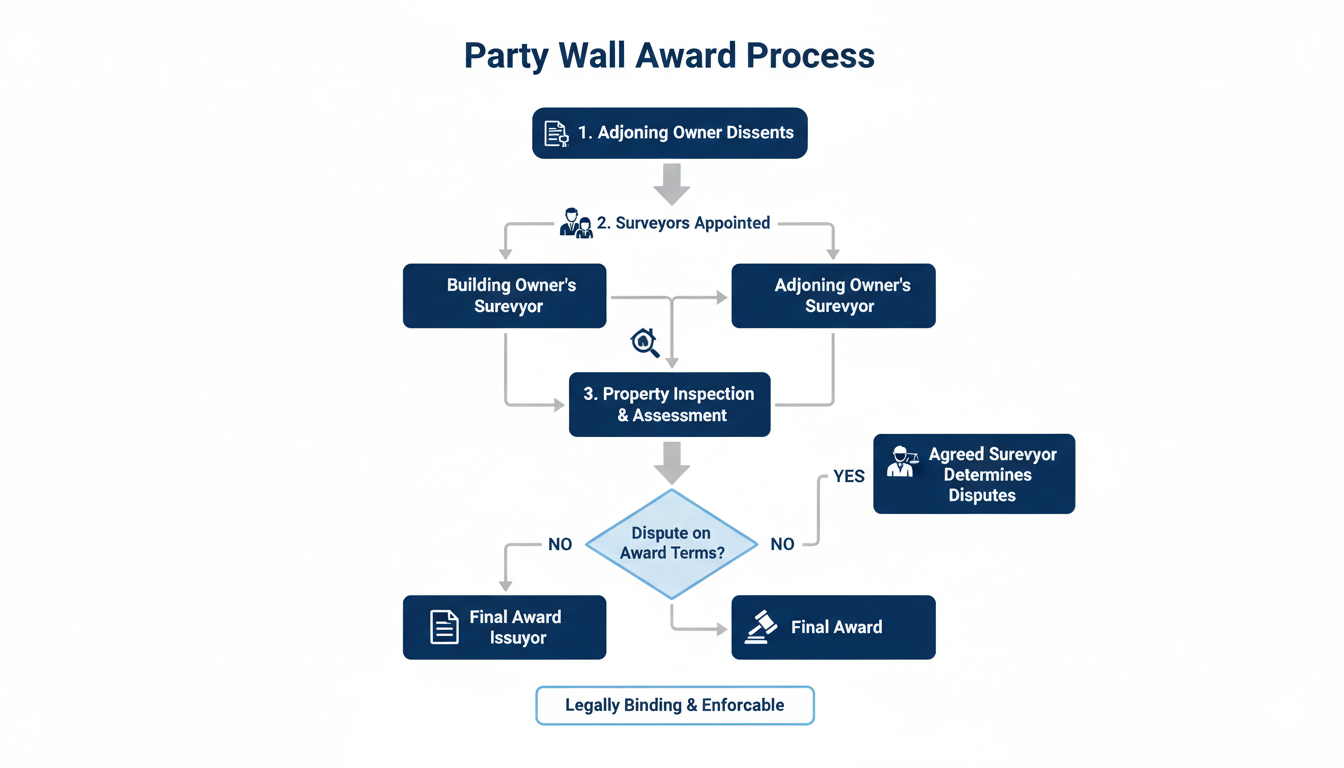
The party wall award process represents the statutory dispute resolution mechanism established by the Party Wall Act 1996. Unlike voluntary mediation, awards provide binding determinations of party wall matters, enforceable through county court proceedings if necessary. Understanding award procedures, content, and implications enables property owners to navigate this formal process effectively.
Surveyor Appointment and Selection
The appointment process begins when an adjoining owner dissents to a party wall notice or fails to respond within the statutory fourteen-day period. At this point, the Party Wall Act requires surveyor appointment to determine dispute terms and prepare a party wall award. The Act provides three appointment mechanisms, each with distinct implications for dispute resolution dynamics and outcomes.
The agreed surveyor option involves both parties jointly appointing a single surveyor to act impartially for both building owner and adjoining owner. This streamlined approach offers cost efficiency since parties share one surveyor’s fees rather than each bearing their own surveyor costs plus agreed surveyor fees under the three-surveyor system. Agreed surveyors must maintain strict impartiality, cannot favour either party, and owe professional duties to both building owner and adjoining owner equally.
Selecting an appropriate agreed surveyor requires careful consideration. The surveyor must possess sufficient party wall expertise to address all technical issues competently. Geographic familiarity with London building types, construction methods, and local building practices enhances decision quality. Crucially, both parties must trust the agreed surveyor’s impartiality and judgment since no separate surveyors advocate for individual party interests under this structure.
The three-surveyor option involves each party appointing their own surveyor to represent their respective interests, with the two appointed surveyors then selecting an agreed surveyor to resolve any matters on which they cannot agree. This structure provides each party with a dedicated professional advocate while maintaining an impartial tiebreaker for contentious issues. Most complex or adversarial party wall disputes proceed under this model where parties want individual representation.
Building owner’s surveyor selection typically occurs before serving party wall notices since building owners usually engage surveyors early to prepare notices and manage party wall compliance. Building owners should select surveyors with proven party wall expertise, construction knowledge relevant to their proposed work, and communication skills to manage potentially contentious neighbour interactions effectively.
Adjoining owner’s surveyor appointment happens reactively after dissent, though adjoining owners may consult surveyors before dissenting to assess whether concerns merit formal dispute proceedings. Adjoining owners should prioritize surveyors demonstrating genuine independence, thorough technical competence, and willingness to advocate firmly for adjoining owner interests while maintaining professional relationships with building owner surveyors.
Agreed surveyor selection requires both appointed surveyors’ agreement, typically based on reputation, party wall experience, and availability. The agreed surveyor ideally possesses more extensive experience than either appointed surveyor, ensuring technical authority when resolving disagreements. Geographic convenience facilitates site inspections, while dispute resolution experience helps manage contentious determinations efficiently.
Surveyor fees vary significantly based on project complexity, dispute intensity, and surveyor seniority. Building owner surveyors typically charge £1,500 to £5,000 for straightforward matters, potentially exceeding £10,000 for complex basement or structural projects. Adjoining owner surveyors charge comparable fees for their representation services. Agreed surveyor fees range from £1,000 to £3,000 for resolving specific disputed matters between appointed surveyors. The Party Wall Act generally makes building owners responsible for all surveyor fees unless surveyors determine otherwise based on unreasonable adjoining owner conduct.
Award Preparation Process
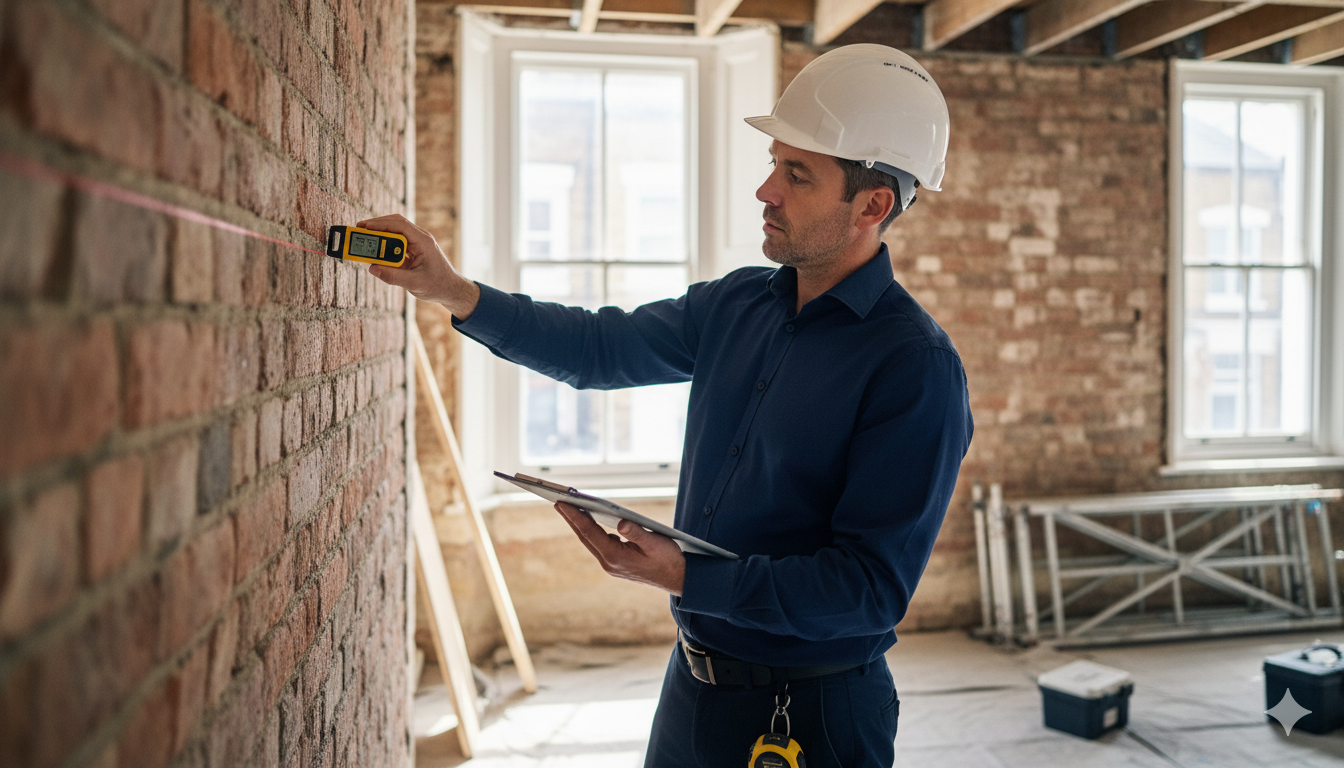
Initial property inspection forms the foundation for party wall awards. Surveyors conduct joint inspections of both properties, documenting existing conditions through photographs, written descriptions, and condition surveys. This pre-construction documentation establishes baseline conditions against which any construction-related damage can be assessed. Thorough condition recording protects both parties—building owners avoid liability for pre-existing damage, while adjoining owners have clear evidence of condition deterioration attributable to building works.
Technical review of construction plans enables surveyors to assess proposed work’s impact on adjoining properties. Surveyors examine architectural drawings, structural calculations, excavation plans, and construction methodologies to identify potential risks to neighbouring structures. This review considers foundation proximity, vibration impacts, temporary support requirements, and any structural interdependencies between properties. Surveyors may request additional information from building owners’ engineers to fully understand construction implications.
Risk assessment and protective measures determination represents surveyors’ core technical function. Based on construction plan review and site conditions, surveyors specify protective measures necessary to prevent damage to adjoining properties. These might include underpinning requirements, temporary propping specifications, vibration monitoring protocols, dust protection measures, or construction methodology restrictions. Surveyors balance building owners’ construction needs against adjoining owners’ legitimate protection interests, specifying proportionate measures rather than excessive precautions that unnecessarily inflate costs.
Access provisions require careful surveyor consideration in London’s dense urban environment. Awards must specify when, how, and where building owners may access adjoining properties for construction purposes. This includes scaffolding erection rights, material storage permissions, and inspection access for monitoring compliance with award terms. Surveyors balance building owners’ practical construction needs against adjoining owners’ privacy and security concerns, establishing reasonable conditions that enable work while respecting property rights.
Cost allocation determinations establish which party bears various expenses arising from party wall procedures and construction works. While building owners generally pay surveyor fees and construction costs, awards may require adjoining owners to contribute costs for improvements to party structures benefiting their properties. Surveyors must carefully distinguish between building owner obligations under the Act and costs properly shared between parties based on mutual benefit.
Dispute resolution between surveyors occurs when building owner’s surveyor and adjoining owner’s surveyor cannot agree on specific award terms. The agreed surveyor then determines disputed matters, issuing a binding determination both appointed surveyors must incorporate into the final award. This three-surveyor determination process adds time and cost but ensures neutral resolution of genuinely contentious technical or interpretive issues where appointed surveyors’ positions reflect legitimate advocacy for their appointing parties.
Award drafting synthesizes all surveyor determinations into a comprehensive written document binding both parties. Awards typically span 10 to 30 pages depending on work complexity, including detailed descriptions of proposed work, specified protective measures, access provisions, recording conditions, cost allocations, and dispute resolutions. Clear, precise drafting prevents subsequent interpretive disputes and facilitates smooth construction execution.
Award Content and Terms
Work description sections document proposed construction in sufficient detail to enable compliance verification. Awards describe excavation depths, wall heights, structural alterations, and construction methodologies with specific measurements and specifications. This detailed documentation ensures building owners understand precisely what work the award authorizes and provides adjoining owners with clear expectations about construction impacts they must accommodate.
Protective measures specifications establish technical requirements building owners must satisfy to prevent damage to adjoining properties. These might include minimum foundation depths, underpinning methodologies, temporary support systems, vibration limits, working hour restrictions, and dust control measures. Surveyors specify performance standards and verification methods enabling both parties and surveyors to assess compliance objectively during construction.
Access rights and limitations balance construction practicality against property owners’ privacy and security interests. Awards specify permissible access times, entry points, equipment that may be placed on adjoining property, and advance notice requirements. These terms might restrict access to reasonable daylight hours, prohibit overnight equipment storage, or require building owners to provide temporary security measures for any access openings created during construction.
Recording conditions establish the inspection and documentation regime for monitoring building works. Awards typically require surveyors to photograph conditions before, during, and after construction, document any damage observed, and verify compliance with specified protective measures. These recording provisions protect both parties by creating objective evidence about construction impacts and regulatory compliance.
Compensation provisions address any loss of amenity or actual damage adjoining owners suffer during construction. Awards might require building owners to compensate adjoining owners for loss of use of rooms during prolonged construction periods, temporary accommodation necessitated by particularly disruptive work, or demonstrable reduction in rental income. Compensation determinations require careful assessment to ensure fairness while avoiding windfall payments unrelated to actual construction impacts.
Special conditions address project-specific concerns beyond standard party wall terms. These might include requirements for construction insurance naming adjoining owners as additional insured parties, security deposits for potential damage, enhanced structural warranties, or specialized monitoring protocols for sensitive heritage properties. Surveyors craft special conditions responding to unique circumstances while maintaining reasonableness and proportionality.
Award service provisions specify timelines for award delivery, dispute resolution procedures if parties object to award terms, and any conditions precedent before work can commence. The Party Wall Act requires surveyors to serve awards on both parties within specified timeframes, triggering fourteen-day appeal periods during which dissatisfied parties may challenge awards in county court.
Advantages of the Award Process
Legal certainty represents awards’ primary advantage over informal agreements or mediation. Party wall awards constitute binding legal determinations enforceable through county court proceedings. This certainty proves essential when parties fundamentally distrust each other or when building owners need definitive documentation authorizing construction despite adjoining owner opposition. Awards eliminate ambiguity about rights and obligations under the Party Wall Act.
Technical expertise application ensures construction methodologies and protective measures align with engineering best practices and industry standards. Experienced party wall surveyors bring specialized knowledge about foundation interactions, structural stability, and construction techniques that mediation processes cannot match. This technical rigour protects both parties—building owners avoid over-specification that inflates costs unnecessarily, while adjoining owners receive genuinely effective protective measures rather than inadequate compromises.
Enforceability mechanisms under the Party Wall Act provide remedies for non-compliance more robust than general contract enforcement. If building owners fail to implement protective measures specified in awards, adjoining owners can seek injunctions compelling compliance or damages compensating for losses resulting from breaches. This enforcement strength makes awards preferable when parties lack confidence in voluntary agreement compliance.
Precedent value of surveyor determinations creates consistency across similar party wall matters. When surveyors issue awards addressing specific technical issues or interpretive questions, these determinations inform future party wall practice even beyond the immediate parties. This precedent function gradually develops party wall law through surveyor expertise rather than requiring expensive court proceedings to resolve every novel question.
Third surveyor determination capability provides neutral resolution when appointed surveyors reach impasse. Rather than leaving disputes unresolved or forcing parties into court proceedings, the agreed surveyor mechanism enables technical expert determination of contentious issues. This structure balances advocacy with impartiality, ensuring disputes receive authoritative resolution from appropriately qualified professionals.
Statutory framework compliance guarantees awards satisfy all Party Wall Act requirements. Unlike informal agreements that might inadvertently violate statutory provisions or fail to address required matters, awards prepared by qualified surveyors necessarily comply with the Act’s requirements. This compliance protects parties from subsequent legal challenges based on procedural irregularities or incomplete party wall arrangements.
Professional oversight throughout construction ensures award compliance and enables rapid response to unexpected issues. Surveyors maintain involvement during building works, conducting inspections, verifying protective measure implementation, and addressing any damage or compliance concerns that arise. This ongoing professional engagement proves valuable for complex construction projects where issues frequently emerge requiring expert assessment and determination.
Limitations and Challenges of Awards
Cost implications make awards expensive compared to mediation, particularly under three-surveyor structures. Total surveyor fees commonly exceed £10,000 for moderately complex London party wall matters, with costs escalating substantially for basement developments, complex structural alterations, or protracted disputes. Building owners bear these costs in most circumstances, though ultimately property owners and property purchasers absorb expenses through construction budgets or property values. Cost-conscious parties may find awards prohibitively expensive relative to dispute values.
Time requirements extend construction commencement dates significantly when award procedures involve disputes between surveyors requiring third surveyor determinations. Standard award procedures typically consume two to four months from surveyor appointment through award service. Complex matters with substantial surveyor disagreement might require six months or longer before awards authorize work commencement. Building owners facing seasonal construction windows or market timing pressures may find award delays commercially damaging.
Relationship damage from adversarial proceedings proves difficult to repair after contentious award processes. When surveyors advocate aggressively for their appointing parties and awards impose unwelcome terms on losing parties, residual hostility often persists throughout construction and beyond. Neighbours who might have maintained cordial relationships through mediated compromises sometimes become permanent adversaries after adversarial award proceedings, creating ongoing quality of life impacts beyond immediate party wall disputes.
Limited scope constraints prevent awards from addressing all concerns parties may have about proposed construction. Party wall awards determine only matters falling within the Party Wall Act’s specific provisions—rights and obligations regarding shared walls, excavations near boundaries, and related matters. Awards cannot address broader construction concerns like general disturbance, loss of view, or impacts unrelated to party wall structures. Parties with comprehensive construction concerns require multiple resolution processes rather than single awards resolving all issues.
Rigid technical determinations sometimes produce outcomes misaligned with parties’ actual interests or practical circumstances. Surveyors bound by professional standards and statutory requirements may specify conventional solutions when creative alternatives might better serve both parties. The formal award structure leaves little room for the innovative compromises mediation facilitates, potentially producing technically correct but practically suboptimal outcomes.
Appeal risks create uncertainty even after awards are issued. Dissatisfied parties may appeal awards to county courts within fourteen days of service, potentially invalidating surveyor determinations and requiring court proceedings to resolve disputes. While most awards survive appeal challenges, the possibility of court intervention extends uncertainty and costs beyond surveyor proceedings themselves.
Professional relationship dependencies affect award quality in unexpected ways. London party wall surveyors frequently work together across multiple projects, potentially creating professional incentives to compromise or accommodate colleagues even when aggressive advocacy might better serve appointing parties. While professional courtesy generally benefits dispute resolution efficiency, it occasionally produces awards prioritizing surveyor relationships over party interests.
Why Appeal a Party Wall Award?
Party wall awards, while binding and authoritative, are not immune to challenge. The Party Wall Act 1996 provides dissatisfied parties with a statutory right to appeal awards to county courts within fourteen days of service. Understanding when appeals are warranted, the grounds that justify them, and the strategic implications of challenging surveyor determinations enables property owners to make informed decisions about whether to accept awards or pursue judicial review.
Valid Grounds for Appeal
The Party Wall Act establishes specific circumstances under which county courts may set aside or modify party wall awards. Appeals cannot simply challenge surveyor judgment or express dissatisfaction with outcomes—they must identify substantive legal or procedural errors that materially affect award validity or fairness.
Procedural irregularities constitute the most common successful appeal grounds. These include failures to comply with statutory notice requirements, surveyor appointment procedures, or award service timelines. When building owners serve defective party wall notices lacking required information, appoint surveyors improperly, or fail to serve awards within reasonable timeframes, courts may invalidate resulting awards. Similarly, surveyors who conduct inadequate property inspections, fail to consult parties appropriately, or issue awards without addressing material concerns may create appealable procedural defects.
Jurisdictional errors arise when surveyors exceed their authority under the Party Wall Act or purport to determine matters falling outside their statutory remit. The Act grants surveyors specific powers regarding party structures, boundary work, and adjacent excavations. When awards attempt to resolve general neighbour disputes, address building regulations compliance, or determine property boundaries, surveyors overstep jurisdictional limits creating grounds for appeal. Courts carefully police this jurisdictional boundary, ensuring surveyors exercise only powers the Act explicitly confers.
Unreasonable determinations provide appeal grounds when surveyor decisions fall outside the range of reasonable professional judgment. While courts respect surveyor expertise and rarely substitute their judgment for technical determinations, egregiously unreasonable awards warrant judicial intervention. This might include specifications for unnecessarily elaborate protective measures costing multiples of proportionate alternatives, inadequate compensation for clear construction damage, or access provisions so onerous they effectively prevent legitimate building work.
Bias or conflict of interest undermines award validity when surveyors demonstrate actual or apparent partiality inconsistent with their professional obligations. Agreed surveyors who secretly favour one party, appointed surveyors who fail to advocate effectively for their appointing parties, or any surveyor with undisclosed financial interests in construction outcomes create appealable conflicts. The appearance of bias suffices—parties need not prove actual prejudice resulted, merely that reasonable observers would question surveyor impartiality.
Failure to determine matters constitutes appealable error when surveyors issue awards that neglect to address material issues properly raised by parties. If adjoining owners identify specific structural concerns during award preparation and surveyors fail to assess these risks or specify appropriate protective measures, resulting awards may be incomplete. Similarly, when disputes arise between appointed surveyors but agreed surveyors decline to determine contentious matters, the failure to exercise determination authority creates appealable gaps in awards.
Manifest factual errors occasionally justify appeals when awards contain demonstrably incorrect factual statements materially affecting determinations. If awards incorrectly describe existing property conditions, misstate proposed construction specifications, or rely on inaccurate technical assumptions, resulting determinations may be invalid. However, courts distinguish between factual errors warranting appeal and mere disputes about technical judgment within surveyor expertise.
Inadequate reasoning undermines awards when surveyors fail to explain the basis for significant determinations. While awards need not contain exhaustive technical justifications, material decisions affecting party rights require sufficient explanation enabling parties to understand surveyor reasoning. Awards imposing unusual conditions, rejecting standard protective measures, or allocating costs atypically should articulate reasons for departing from conventional approaches. Unexplained determinations on contentious issues may be appealable for lack of adequate reasoning.
The County Court Appeal Process
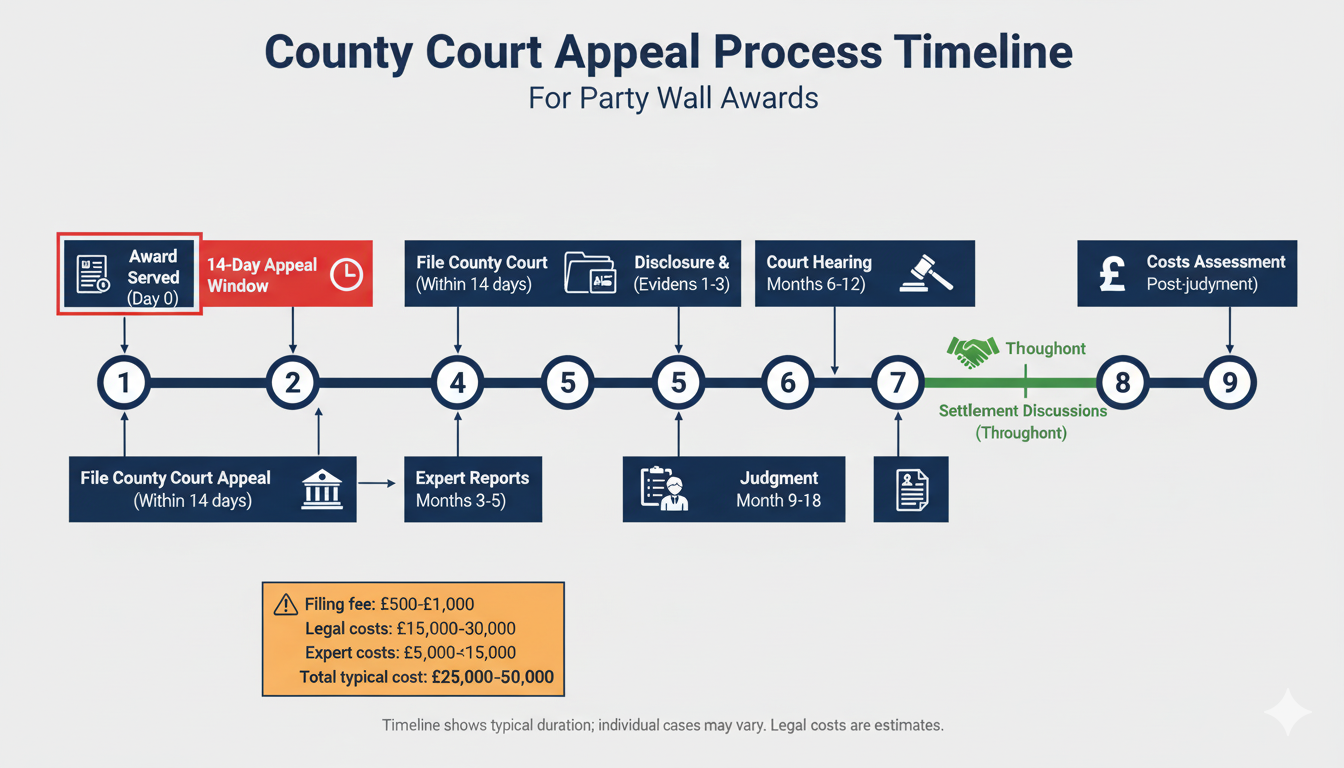
The fourteen-day limitation period begins running from the date surveyors serve awards on parties. This strict deadline requires prompt legal advice when parties contemplate appeals—delays beyond fourteen days generally preclude judicial review regardless of appeal merit. Courts occasionally extend deadlines in exceptional circumstances involving service disputes or genuine delivery failures, but parties should never rely on discretionary extensions when statutory deadlines appear imminent.
Initiating appeals requires filing a claim in the county court serving the property location. London property owners typically file in the Central London County Court or local county court covering their borough. The claim form must identify the challenged award, specify appeal grounds with particularity, and indicate the relief sought—whether complete award invalidation, specific term modification, or remission to surveyors for reconsideration. Filing fees currently approximate £500 to £1,000 depending on claim value and complexity.
Responding to appeals obligates surveyors who issued awards to justify their determinations through witness statements and supporting documentation. Surveyors typically engage solicitors to represent their professional interests, though they may also appear personally if legally confident. The opposing party (building owner or adjoining owner depending on appellant identity) frequently joins proceedings to protect their interests, potentially retaining separate legal representation if they disagree with surveyor defense strategies.
Disclosure and evidence phases enable parties to request relevant documents and expert reports underlying award determinations. Surveyors must produce their working papers, technical assessments, correspondence with parties, and any expert advice informing decisions. This disclosure often reveals surveyor reasoning not apparent from awards themselves, sometimes strengthening or undermining appeal grounds depending on documentation quality and thoroughness.
Expert evidence plays a crucial role when appeals involve technical disputes about engineering appropriateness or construction methodology. Courts, lacking specialized party wall expertise, frequently appoint single joint experts or hear competing expert testimony assessing whether challenged determinations fall within reasonable professional judgment. These technical experts essentially review surveyor decisions for professional adequacy rather than correctness, recognizing that multiple reasonable approaches often exist for any party wall matter.
Court hearings typically last one to three days for straightforward appeals, potentially extending to week-long trials for complex technical disputes involving multiple properties or sophisticated engineering questions. District judges in county courts handle most party wall appeals, though particularly complex matters may be transferred to circuit judges. Hearings proceed formally with legal representation, witness testimony, expert evidence, and legal argument about statutory interpretation and surveyor authority.
Judicial remedies available to courts include outright award invalidation, specific term modification, cost awards reflecting appeal outcomes, or remission to surveyors for reconsideration consistent with court findings. Courts generally prefer remission over substituting their judgment for surveyor determinations when appeals identify procedural defects or insufficient reasoning. This preserves surveyor technical authority while ensuring awards comply with statutory requirements and procedural fairness standards.
Costs consequences follow standard civil litigation principles—unsuccessful parties typically pay successful parties’ reasonable legal costs in addition to their own expenses. Party wall appeal costs commonly exceed £10,000 to £25,000 per party for straightforward matters, escalating to £50,000 or more for complex trials involving extensive expert evidence. These substantial cost exposures heavily influence strategic appeal decisions, particularly when dispute values are modest relative to litigation risks.
Appeal Costs and Success Rates
Legal costs dominate party wall appeal expenses, typically accounting for 70-80% of total expenditure. Solicitor fees for preparing appeals, managing disclosure, coordinating expert evidence, and representing parties at hearings vary significantly based on firm location, lawyer seniority, and matter complexity. Central London solicitors may charge £300-£500 per hour, while regional firms offer more moderate rates. Total solicitor fees for moderately complex appeals typically range from £15,000 to £30,000, though complex technical disputes can substantially exceed these figures.
Expert witness costs add another substantial expense layer. Party wall specialists or structural engineers providing expert evidence charge £150-£300 per hour for report preparation, £2,000-£5,000 for comprehensive reports, and £1,500-£3,000 per day for court attendance. Appeals involving competing expert evidence from both parties can easily generate combined expert costs exceeding £15,000 before accounting for court-appointed single joint experts when courts prefer unified technical advice.
Court fees and administrative expenses contribute modestly to overall appeal costs. The initial claim filing fee of £500-£1,000 represents only a small fraction of total expenditure, with additional hearing fees, transcript costs, and enforcement expenses adding several thousand pounds. These court-related costs prove predictable and manageable compared to variable legal and expert expenses.
Opportunity costs from construction delays often exceed direct legal expenses for building owner appellants. Every month spent litigating awards delays construction commencement, generating holding costs, contractor scheduling complications, market timing risks, and rental income losses for investment properties. A six-month appeal process might cost building owners £10,000-£30,000 in indirect expenses beyond legal fees, making swift award acceptance economically rational even when grounds for appeal exist.
Success rates for appeals vary considerably based on grounds asserted and case quality. Appeals based on clear procedural irregularities—defective notices, improper surveyor appointments, or jurisdictional overreach—succeed at rates approaching 60-70% when well-documented and properly argued. Courts readily identify and remedy obvious statutory non-compliance that undermines award validity.
Appeals challenging substantive surveyor judgment on technical matters succeed far less frequently, typically at rates below 20-30%. Courts respect surveyor expertise and recognize that professional judgment encompasses reasonable disagreement about appropriate protective measures, compensation amounts, and access provisions. Unless surveyor determinations fall clearly outside acceptable professional standards, courts defer to technical expertise rather than substituting judicial judgment.
Appeals alleging bias or conflict of interest achieve mixed results depending on evidence quality. Demonstrable conflicts—financial interests, undisclosed relationships, or documented partiality—typically succeed. Allegations based on suspicion, professional disagreements, or personality conflicts rarely persuade courts without concrete evidence of actual or apparent bias materially affecting determinations.
Time to appeal resolution averages nine to eighteen months from filing through final judgment for straightforward appeals proceeding to trial. Complex technical disputes or appeals involving multiple parties may extend to two years or longer. This protracted timeline substantially exceeds the three to six months typical award procedures consume, effectively tripling total dispute resolution time when appeals proceed rather than parties accepting initial awards.
Strategic Considerations Before Appealing
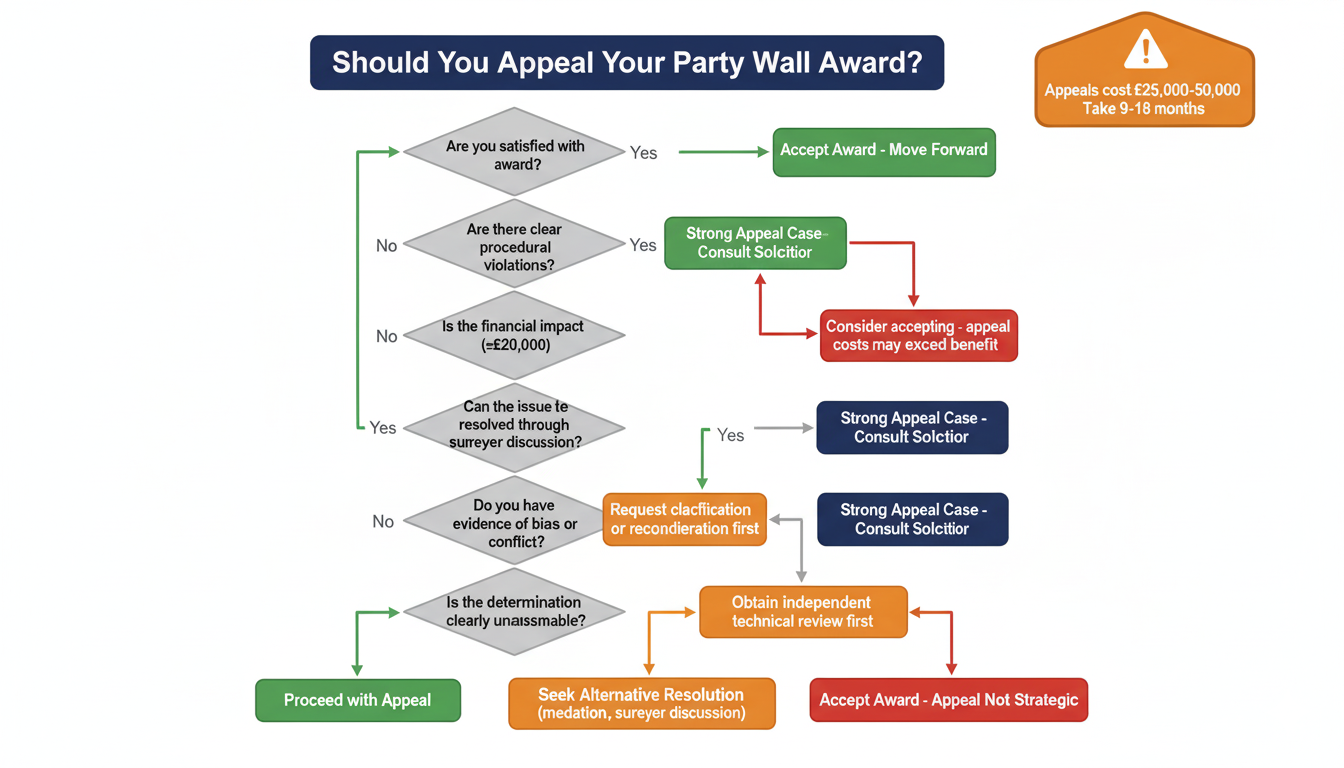
Cost-benefit analysis must account for both direct litigation expenses and indirect construction delay costs. When the disputed amount—whether excessive surveyor fees, inadequate compensation, or costly protective measures—falls below £20,000-£30,000, appeal costs often exceed potential savings even with successful outcomes. Only when awards impose clearly disproportionate burdens or the precedent value justifies expense should parties pursue appeals for modest financial stakes.
Settlement prospects during appeals often improve as litigation crystallizes issues and exposes weaknesses in both parties’ positions. Many party wall appeals settle after disclosure reveals surveyor reasoning or expert reports identify compromise solutions. Parties should remain open to settlement discussions throughout appeal proceedings, recognizing that negotiated resolutions might deliver better practical outcomes than uncertain judicial determinations.
Relationship damage escalation intensifies when appeals transform party wall disagreements into adversarial litigation. Neighbours who might have maintained civil relationships despite award dissatisfaction often become permanent adversaries after contested court proceedings. Building owners should carefully weigh relationship preservation interests against appeal benefits, particularly in ongoing neighbour contexts where future cooperation matters.
Construction delay tolerance affects appeal strategy profoundly. Building owners facing urgent construction timelines, seasonal windows, or market timing pressures may find accepting imperfect awards preferable to litigation delays regardless of appeal merit. Conversely, when construction timing proves flexible or projects haven’t commenced, appeals pose less practical disruption enabling parties to pursue principled challenges without severe commercial consequences.
Precedent and principle considerations sometimes justify appeals despite unfavourable cost-benefit ratios. When awards establish problematic precedents affecting future party wall practice, professional surveyors or construction industry bodies may support test case appeals clarifying statutory interpretation or professional standards. Individual property owners rarely pursue appeals solely for precedent value given substantial personal costs, but collective industry interests occasionally support strategic litigation advancing party wall practice development.
Alternative resolution through surveyor discussions often proves more effective than formal appeals. Before filing court proceedings, dissatisfied parties should consider requesting surveyors review contentious determinations with fresh perspective. Surveyors retain authority to amend awards correcting errors or addressing new information that emerged post-issuance. This informal reconsideration costs nothing, preserves professional relationships, and sometimes produces acceptable modifications without litigation necessity.
Partial acceptance strategies enable parties to implement non-contentious award provisions while appealing specific disputed terms. Courts may grant interim orders allowing construction to proceed under agreed conditions pending appeal determination, preventing total project delays while resolving discrete disagreements. This selective implementation approach balances practical construction needs against legitimate appeal interests.
Alternatives to Formal Appeals
Requesting award clarification from issuing surveyors addresses ambiguities or apparent errors without formal litigation. Surveyors possess inherent authority to clarify award terms, correct obvious mistakes, or provide supplemental determinations addressing matters inadvertently omitted. Written clarification requests identifying specific concerns often elicit surveyor responses resolving issues satisfactorily without judicial involvement. This collaborative approach costs minimal fees—typically £500-£1,500 for surveyor review—and preserves working relationships while addressing genuine concerns.
Negotiated award modifications through surveyor agreement offer practical alternatives to appeals when both appointed surveyors recognize determinations require adjustment. If building owners’ and adjoining owners’ surveyors agree that issued awards contain errors or benefit from reconsideration, they may jointly prepare supplementary awards amending contentious terms. This consensual modification process operates faster than appeals, costs less than litigation, and produces outcomes both parties can accept given their surveyors’ professional input.
Mediation of appeal-worthy disputes provides structured settlement opportunities before committing to litigation. Rather than immediately filing county court appeals, parties can engage mediators to facilitate resolution discussions addressing the concerns prompting appeal consideration. Successful mediation produces binding settlement agreements replacing disputed award terms with negotiated alternatives. This approach costs £2,000-£5,000 rather than £25,000+ for appeals, resolves within weeks rather than months, and preserves relationships that litigation would destroy.
Partial compliance pending negotiation enables parties to implement undisputed award provisions while negotiating resolution of contentious terms outside formal appeal proceedings. Building owners might commence construction following protective measures they accept while continuing discussions about disputed access provisions or compensation amounts. This pragmatic approach prevents total project paralysis while creating breathing space for constructive problem-solving without litigation pressure.
Independent technical review before formal appeals helps parties assess whether surveyor determinations genuinely warrant judicial challenge. Consulting respected party wall specialists or structural engineers to review awards objectively provides reality checks about appeal merits and probable outcomes. When independent reviewers conclude that challenged awards fall within reasonable professional judgment despite party dissatisfaction, this counsel often dissuades unfounded appeals saving substantial litigation expense.
Industry ombudsman schemes for surveyor professional conduct complaints offer alternatives when appeals primarily address surveyor behaviour rather than substantive determinations. The Pyramus and Thisbe Club provides complaint investigation procedures for chartered surveyors, potentially disciplining professionals who breach codes of conduct. While ombudsman findings don’t invalidate awards, they establish professional accountability mechanisms addressing surveyor misconduct through regulatory channels rather than legal proceedings.
Arbitration clauses in initial party wall agreements—though rare in standard practice—could provide contractual alternatives to county court appeals. Parties might agree during surveyor appointment that disputes about final awards will be submitted to binding arbitration by senior construction professionals rather than county court judges. This contractual variation of statutory appeal rights requires explicit mutual consent but offers potentially faster, more specialized dispute resolution than generalist court proceedings.
When Appeals Make Strategic Sense
Clear procedural violations involving defective notices, improper surveyor appointments, or statutory deadline failures almost always warrant appeals given high success probabilities and fundamental fairness concerns. When building owners materially fail to comply with Party Wall Act procedures, resulting awards lack proper statutory foundation justifying judicial intervention regardless of substantive determination quality.
Manifest injustice situations where awards impose grossly disproportionate burdens or ignore compelling evidence of construction risks demand appeal consideration despite litigation costs and delays. If awards specify protective measures costing £100,000+ when proportionate alternatives exist at £30,000, or fail to address documented structural vulnerabilities adjoining owners identified, the injustice severity may justify appeal expenses and relationship consequences.
Test case opportunities developing important party wall precedents occasionally merit appeals supported by professional organizations or industry groups. When novel statutory interpretation questions arise or awards establish problematic precedents affecting broader construction practice, strategic litigation advancing legal clarity benefits entire industries beyond immediate party interests. Such appeals often attract professional funding and expert support reducing individual cost burdens.
Threshold damage situations where accepting flawed awards creates liability exposures exceeding appeal costs justify judicial challenges. If awards authorize construction methodologies demonstrably threatening structural damage to valuable heritage properties, the risk of catastrophic losses dwarfs litigation expenses making appeals rational risk management rather than mere dissatisfaction with surveyor judgment.
Bias evidence establishing clear surveyor conflicts of interest or demonstrable partiality demands appeals to vindicate procedural fairness principles. The party wall system depends on surveyor impartiality and professional integrity. When these foundations crumble through documented bias, appeals serve important system-correcting functions beyond individual case outcomes.
Detailed Comparison: Mediation vs Award
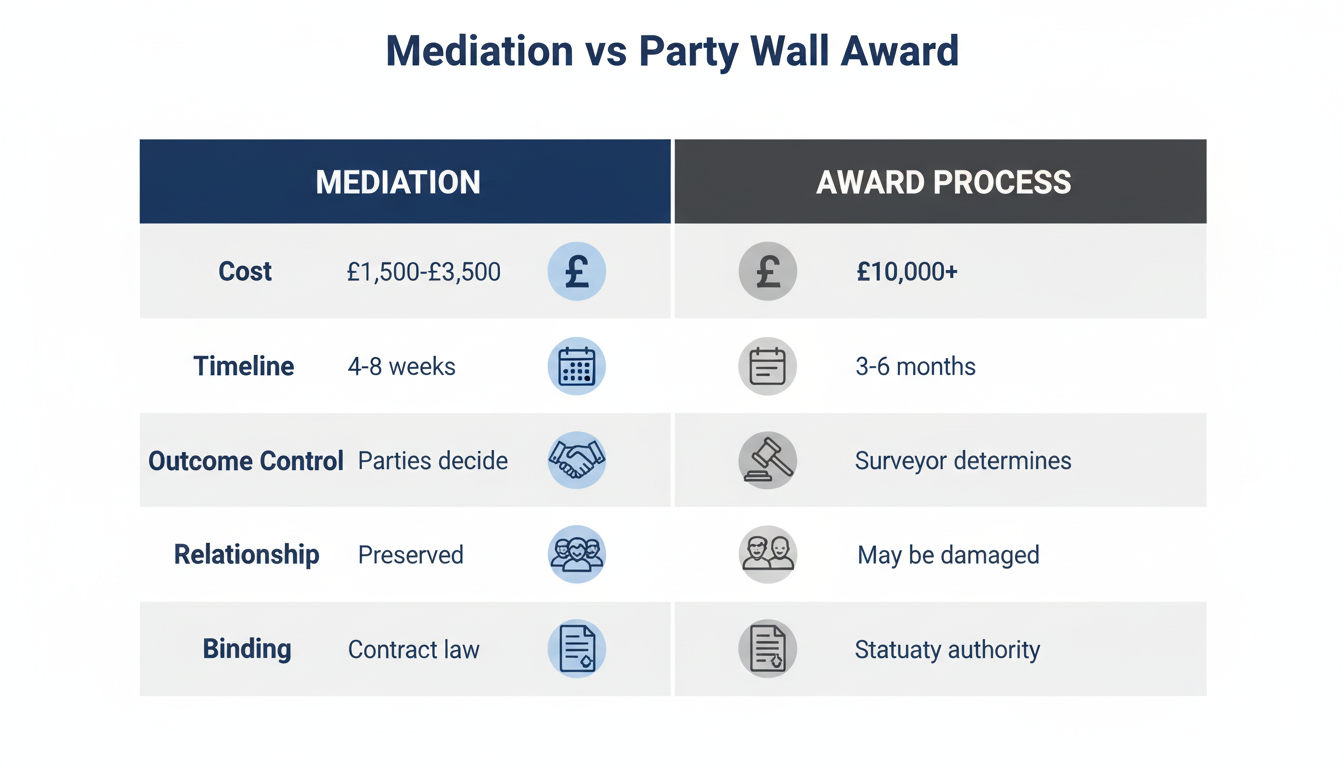
When choosing between mediation and the award process, property owners must evaluate multiple factors spanning cost, time, outcomes, and relationship impacts. This comprehensive comparison illuminates the strategic considerations that should guide dispute resolution pathway selection.
Cost Analysis
Direct costs for mediation typically range from £1,500 to £3,500 total, split equally between parties unless agreed otherwise. This includes mediator fees, venue costs, and any administrative expenses. Parties save additional costs by avoiding surveyor appointments, with building owners eliminating their obligation to pay adjoining owner surveyor fees and all agreed surveyor fees under three-surveyor structures. For straightforward disputes, mediation’s cost advantage proves substantial.
Award process direct costs vary widely based on project complexity and dispute intensity. Straightforward single-storey extensions might generate total surveyor fees of £3,000 to £6,000. Complex basement excavations, structural alterations, or contentious disputes commonly produce combined surveyor fees exceeding £15,000. Building owners bear all appointed surveyor fees plus their own surveyor costs in most circumstances, creating significant financial exposure even before construction begins.
Indirect costs from construction delays affect cost comparisons substantially. Mediation’s rapid resolution minimizes holding costs, contractor mobilization expenses, and market timing risks. Award procedures delaying construction for months generate significant indirect costs through financing expenses, rental income loss, or seasonal construction complications. These indirect costs often exceed direct surveyor fees, making rapid mediation settlement economically rational even when direct mediation costs approach award procedure costs.
Legal costs arise when mediation fails and parties must subsequently pursue award procedures, effectively doubling dispute resolution investment. However, attempted mediation sometimes benefits subsequent award proceedings by clarifying issues, narrowing disputes, and demonstrating reasonableness that may influence surveyor fee allocations. The risk of failed mediation’s cost duplication must be weighed against the probability of successful settlement based on dispute characteristics and party positions.
Timeline Comparison
Mediation timelines typically span four to eight weeks from initial agreement through settlement documentation. Initial engagement and mediator selection consume one to two weeks. Pre-mediation preparation requires another week for position statements and document exchange. The mediation session itself usually occurs within two weeks of completion of preparations. Settlement documentation typically finalizes within one week following successful mediation sessions. This compressed timeline enables rapid dispute resolution and minimal construction delay.
Award procedure timelines extend significantly longer, particularly when disputes arise between appointed surveyors. Initial surveyor appointments and preliminary property inspections typically consume two to three weeks. Award preparation including technical review, site assessment, and draft preparation requires four to eight weeks for moderately complex matters. When appointed surveyors disagree, third surveyor determination adds another three to six weeks. Total timeline from surveyor appointment through final award service commonly spans three to six months, with complex or contentious matters occasionally extending beyond six months.
The fourteen-day appeal period following award service adds uncertainty even after awards are issued. During this period, construction cannot safely commence since dissatisfied parties may file county court appeals potentially invalidating awards. This statutory delay extends total timelines and creates risk that months of surveyor work might be wasted if courts reject award terms.
Sequential processing affects timelines when parties attempt mediation before proceeding to awards. If mediation succeeds, parties save the three to six months awards require. If mediation fails, the four to eight weeks consumed by mediation delays eventual award completion by one to two months. This sequential risk must be balanced against mediation’s success probability and the substantial time savings successful mediation delivers.
Outcome Control and Flexibility
Mediation provides maximum party control over outcomes since nothing binds parties without their voluntary agreement. This control proves particularly valuable when parties have specific concerns awards might not address adequately or when creative solutions better serve mutual interests than conventional surveyor determinations. The collaborative problem-solving approach enables parties to craft tailored solutions reflecting their unique circumstances and priorities.
Award procedures surrender outcome control to professional surveyors applying statutory standards and technical judgment. While appointed surveyors advocate for their appointing parties’ interests, ultimate determinations reflect surveyor professional assessments rather than party preferences. Parties retain no veto over award terms beyond limited appeal rights based on specific procedural or legal errors. This surrender of control ensures disputes reach definitive resolution but may produce outcomes neither party considers ideal.
Flexibility in addressing non-statutory concerns represents mediation’s significant advantage. Parties can negotiate comprehensive settlements covering party wall matters, general construction impacts, future renovation coordination, and relationship preservation concerns within a single mediated agreement. Awards’ limited scope means parties may require separate negotiations addressing concerns falling outside the Party Wall Act’s provisions.
Precedent constraints limit award flexibility while providing consistency. Surveyors bound by established party wall practice cannot deviate substantially from conventional approaches even when unusual circumstances might justify novel solutions. Mediation’s freedom from precedent enables parties to explore approaches unsuitable for formal awards but perfectly appropriate for their specific situation.
Relationship Impact
Collaborative dynamics inherent in mediation preserve neighbour relationships more effectively than adversarial award proceedings. The problem-solving mindset mediation fosters contrasts sharply with positional advocacy characterizing surveyor representation. Parties who successfully mediate disputes typically maintain civil ongoing relationships, having demonstrated mutual respect and problem-solving capability through the mediation process itself.
Adversarial positioning during award procedures generates lasting hostility in many cases. When appointed surveyors advocate aggressively, impose unwelcome protective measures, or challenge the opposing party’s good faith, residual resentment often persists long after awards conclude construction authorizations. This relationship damage proves particularly problematic in terraced house contexts where parties interact daily and may require future party wall cooperation for their own renovations.
Trust-building opportunities arise naturally during mediation as parties engage directly, observe the other’s reasonableness, and develop mutual understanding. These positive interactions sometimes transform initially hostile relationships, creating foundations for constructive future interactions. Award procedures conducted entirely through surveyor intermediaries provide no equivalent trust-building opportunities.
Professional relationship preservation motivates some building owners to pursue mediation even when confident they would prevail in award procedures. Particularly in cases involving family members, long-term neighbours, or parties expecting future cooperation needs, the relationship-preservation value of collaborative dispute resolution outweighs any tactical advantages adversarial procedures might deliver.
Legal and Enforcement Considerations
Award enforceability under the Party Wall Act provides strong legal remedies for non-compliance. County courts can grant injunctions compelling award compliance, award damages for breaches, and impose costs on parties refusing reasonable award terms. This enforcement framework ensures parties cannot simply ignore inconvenient award provisions.
Mediated settlement enforceability depends on general contract law rather than statutory provisions. While mediated agreements create binding contracts, enforcement requires separate breach of contract proceedings without the Party Wall Act’s specific remedies. This enforcement limitation makes mediated settlements less robust when parties doubt the other’s commitment to honouring agreements.
Legal precedent generation through awards benefits the broader party wall community by developing practical interpretations of statutory provisions. Surveyor determinations addressing novel questions create de facto precedents informing future practice even absent formal publication. This precedent function serves public policy interests beyond immediate party concerns, though it provides little direct benefit to parties whose disputes generate precedent.
Confidentiality in mediation versus public nature of award proceedings affects parties differently based on privacy concerns and commercial sensitivities. Mediation’s confidential environment protects parties from publicity about disputes or settlement terms. Awards, while not publicly filed, create documents potentially discoverable in future proceedings and may be discussed among surveyor professional communities.
Making the Right Choice for Your Situation
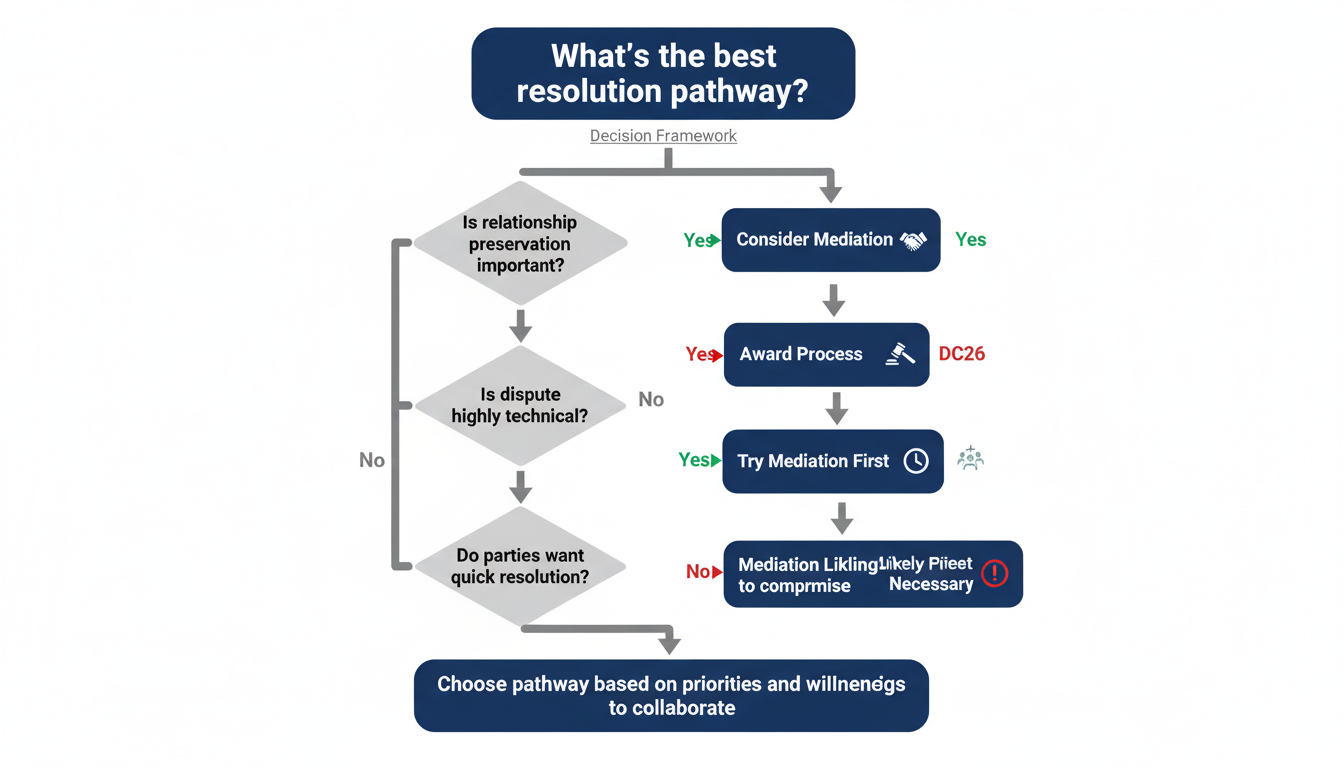
Selecting between mediation and the award process requires careful assessment of your specific circumstances, priorities, and dispute characteristics. This strategic framework guides decision-making toward the resolution pathway most likely to deliver optimal outcomes for your particular situation.
Decision Framework
Begin by assessing dispute intensity and relationship dynamics. If parties maintain generally positive relationships despite current disagreement and both demonstrate willingness to compromise, mediation offers substantial advantages. Conversely, when relationships have deteriorated irreparably or parties occupy entrenched positions with no apparent settlement zone, award procedures provide necessary neutral determination authority.
Evaluate technical complexity of disputed issues. Simple disagreements about procedural matters, access timing, or compensation amounts suit mediation well since technical expertise requirements are modest. Complex engineering disputes about foundation adequacy, structural stability, or specialized construction methodologies require party wall surveyor expertise best delivered through formal award procedures.
Consider urgency and timeline requirements. Building owners facing pressing construction deadlines, seasonal windows, or market timing constraints benefit substantially from mediation’s rapid resolution potential. When time pressure is modest and parties can accommodate multi-month award procedures without significant commercial damage, the timeline advantage of mediation diminishes.
Assess cost tolerance and budget flexibility. Parties with limited resources may find award procedures prohibitively expensive, making mediation their only practical option despite potential disadvantages. Well-resourced parties may prefer award procedures’ legal certainty despite higher costs, particularly when dispute values justify substantial professional fees.
Examine relationship preservation priorities. Parties planning to remain neighbours long-term, family members engaging in party wall procedures, or property owners likely to require future party wall cooperation should strongly consider mediation to preserve relationships damaged by adversarial proceedings. When parties expect no future interaction, relationship preservation provides minimal decision-making weight.
Analyze power dynamics and resource asymmetries between parties. Sophisticated building owners with professional support may leverage power imbalances during mediation, pressuring less-resourced adjoining owners into inadequate settlements. When significant resource disparities exist, formal award procedures providing each party with professional advocacy may better protect vulnerable parties’ interests despite surrendering outcome control.
Consider enforceability requirements based on trust levels between parties. If both parties have demonstrated reliability and good faith, mediated settlement enforceability proves adequate. When trust is absent and parties expect potential non-compliance, awards’ stronger enforcement mechanisms justify additional cost and time investment.
Recommended Strategies
Attempt early mediation before formal dissent when feasible. Building owners serving party wall notices should consider offering mediation to address adjoining owner concerns before formal surveyor appointments become necessary. This early intervention maximizes mediation’s cost and relationship benefits while preserving award procedures as fallback options if mediation proves unsuccessful.
Use hybrid approaches combining mediation and award procedures strategically. Parties might appoint surveyors as the Act requires but agree to mediate specific contentious issues before surveyors finalize awards. This hybrid approach provides professional surveyor expertise for technical determinations while reserving mediation for subjective issues better suited to collaborative resolution.
Include mediation clauses in party wall agreements committing parties to attempt mediation before escalating disputes to third surveyor determinations. This contractual commitment encourages good faith settlement efforts while preserving full award procedure rights if mediation fails. The mediation clause establishes a structured escalation pathway balancing collaborative and adversarial resolution mechanisms.
Engage experienced professionals when determining dispute resolution pathways. Consulting qualified party wall surveyors or solicitors experienced in construction disputes provides strategic perspective on which resolution pathway best serves your interests. Professional advisors assess dispute characteristics, likely outcomes under different procedures, and strategic considerations beyond immediate party awareness.
Document dispute resolution attempts thoroughly regardless of chosen pathway. Detailed records of settlement offers, mediation participation, and good faith negotiation efforts influence surveyor fee allocations in award procedures and support litigation positions if disputes ultimately reach courts. This documentation demonstrates reasonableness that may prove valuable in multiple contexts.
Common Scenarios and Recommendations
Scenario 1: Single-storey extension with nervous adjoining owner Best approach: Mediation Reasoning: Limited technical complexity, relationship preservation valuable, adjoining owner likely needs reassurance rather than formal advocacy. Mediation session allowing adjoining owner to voice concerns, building owner to provide detailed explanations, and mediator to clarify realistic impacts often resolves anxiety driving dissent.
Scenario 2: Complex basement excavation near heritage property Best approach: Award process Reasoning: Substantial technical complexity requiring professional surveyor expertise, significant engineering questions about foundation interactions and heritage protection, and high damage risk justifying robust protective measures. Award procedures ensure appropriate technical rigor and provide strong enforcement mechanisms protecting valuable heritage property.
Scenario 3: Neighbourly dispute escalated from pre-existing tensions Best approach: Mediation Reasoning: Underlying relationship issues rather than genuine technical concerns drive dispute. Mediation addresses root causes of conflict, potentially transforming relationship while resolving immediate party wall disagreement. Award procedures would determine technical matters but leave relationship hostility unaddressed, ensuring ongoing problems.
Scenario 4: Party wall damage claim mid-construction Best approach: Award process (if surveyors already appointed) or specialist damage assessment Reasoning: Technical assessment of causation and quantification of damage requires professional expertise. If party wall surveyors are already appointed under existing award, utilize their expertise and authority for damage determination. For disputes without existing surveyor involvement, consider specialist building damage assessors before potentially resorting to litigation.
Scenario 5: Surveyor fee dispute between building and adjoining owners Best approach: Mediation Reasoning: Primarily financial rather than technical disagreement, parties may have legitimate different understandings of fee responsibilities, and mediation’s rapid, cost-effective resolution prevents fee dispute costs from exceeding disputed amounts. Mediator helps parties understand statutory fee allocation principles and reach pragmatic cost-sharing arrangements.
Scenario 6: Multiple adjoining properties with varied concerns Best approach: Combined approach—mediation for amenable parties, awards for resistant parties Reasoning: Building owners facing party wall notices to multiple neighbours may find some adjoining owners readily addressable through mediation while others require formal procedures. Flexible approach tailoring resolution mechanisms to each relationship optimizes overall efficiency while ensuring all statutory obligations are met.
Expert Support: Survey of Party Wall’s Approach
At Survey of Party Wall, we’ve refined our dispute resolution approach through fifteen years of practice across every London borough. Our methodology emphasizes early conflict identification, strategic pathway selection, and outcome optimization balancing technical excellence with relationship preservation.
We begin every party wall matter with careful assessment of dispute potential and relationship dynamics. During initial consultations, we evaluate technical concerns adjoining owners are likely to raise, relationship history between parties, and each party’s sophistication in construction matters. This assessment informs our recommendations about appropriate dispute resolution pathways before conflicts escalate beyond early intervention opportunities.
When mediation appears appropriate based on dispute characteristics and party positions, we facilitate connections with qualified party wall mediators from our professional network. We help clients prepare effective mediation position statements, identify creative settlement options, and evaluate proposed compromises objectively. Our technical expertise supports clients throughout mediation, ensuring mediated settlements adequately protect their interests while achieving resolution efficiency.
For disputes requiring formal award procedures, we provide comprehensive surveyor services as either appointed surveyors or agreed surveyors depending on project structure. Our award preparation emphasizes clarity, technical rigor, and practical enforceability. We conduct thorough property inspections, specify proportionate protective measures, and prepare awards enabling smooth construction execution while protecting all parties’ legitimate interests.
Throughout the dispute resolution process, we maintain focus on ultimate project success rather than winning individual battles. Sometimes this means encouraging building owner clients to accept enhanced protective measures that marginally increase construction costs but preserve valuable neighbour relationships. Other times it requires firm advocacy protecting adjoining owner clients from inadequate protective measures or unreasonable construction impacts.
We view dispute resolution as part of comprehensive party wall service rather than a separate adversarial process. Our goal is always to enable construction projects to proceed safely and legally while protecting neighbouring properties and maintaining civil relationships between parties who must coexist as neighbours long after construction concludes.
Conclusion: Navigating Your Path to Resolution
Party wall disputes need not become destructive, expensive ordeals when handled strategically with appropriate professional support. The choice between mediation and the award process fundamentally shapes your dispute resolution experience, affecting costs, timelines, relationships, and ultimate outcomes in profound ways.
Key Takeaways:
Strategic pathway selection based on dispute characteristics and party priorities delivers optimal results. Early-stage procedural disagreements between reasonable parties suit mediation, while complex technical disputes or adversarial relationships require formal award procedures providing professional determination authority.
Costs and timelines vary substantially between resolution mechanisms. Mediation typically costs £1,500-£3,500 and resolves within 4-8 weeks, while award procedures commonly exceed £10,000 and require 3-6 months, making pathway selection a significant economic decision.
Relationship preservation should influence resolution choices in ongoing neighbour contexts. Mediation’s collaborative approach maintains civil relationships where adversarial award proceedings often generate lasting hostility, particularly important in terraced house situations requiring ongoing neighbour cooperation.
Professional guidance optimizes dispute resolution strategy and execution. Experienced party wall surveyors assess disputes objectively, recommend appropriate pathways, and execute chosen procedures with technical excellence protecting client interests throughout resolution processes.
Hybrid approaches combining mediation and award elements often deliver superior outcomes. Strategic use of both mechanisms capitalizes on each method’s advantages while mitigating limitations, particularly effective for complex matters with both technical and relationship dimensions.
Whether you face structural concerns about neighbouring excavations, damage claims from ongoing construction, or disagreements about party wall processes and costs, Survey of Party Wall provides expert support navigating resolution pathways toward successful outcomes. Our combination of technical mastery, dispute resolution experience, and commitment to practical solutions helps London property owners resolve party wall disputes efficiently while preserving the relationships and property values that matter most.
Related Resources:
Party Wall Surveyor in Newham: East London Specialist
Mansard Roof Conversion Party Wall Process (London Guide)
Kitchen Extension Party Wall Requirements in London
Party Wall Surveyor in Newham: East London Specialist
DIY Party Wall Notice: Can You Self Serve or Need a Surveyor?