Party Wall Agreement Cost London 2026?
Introduction:
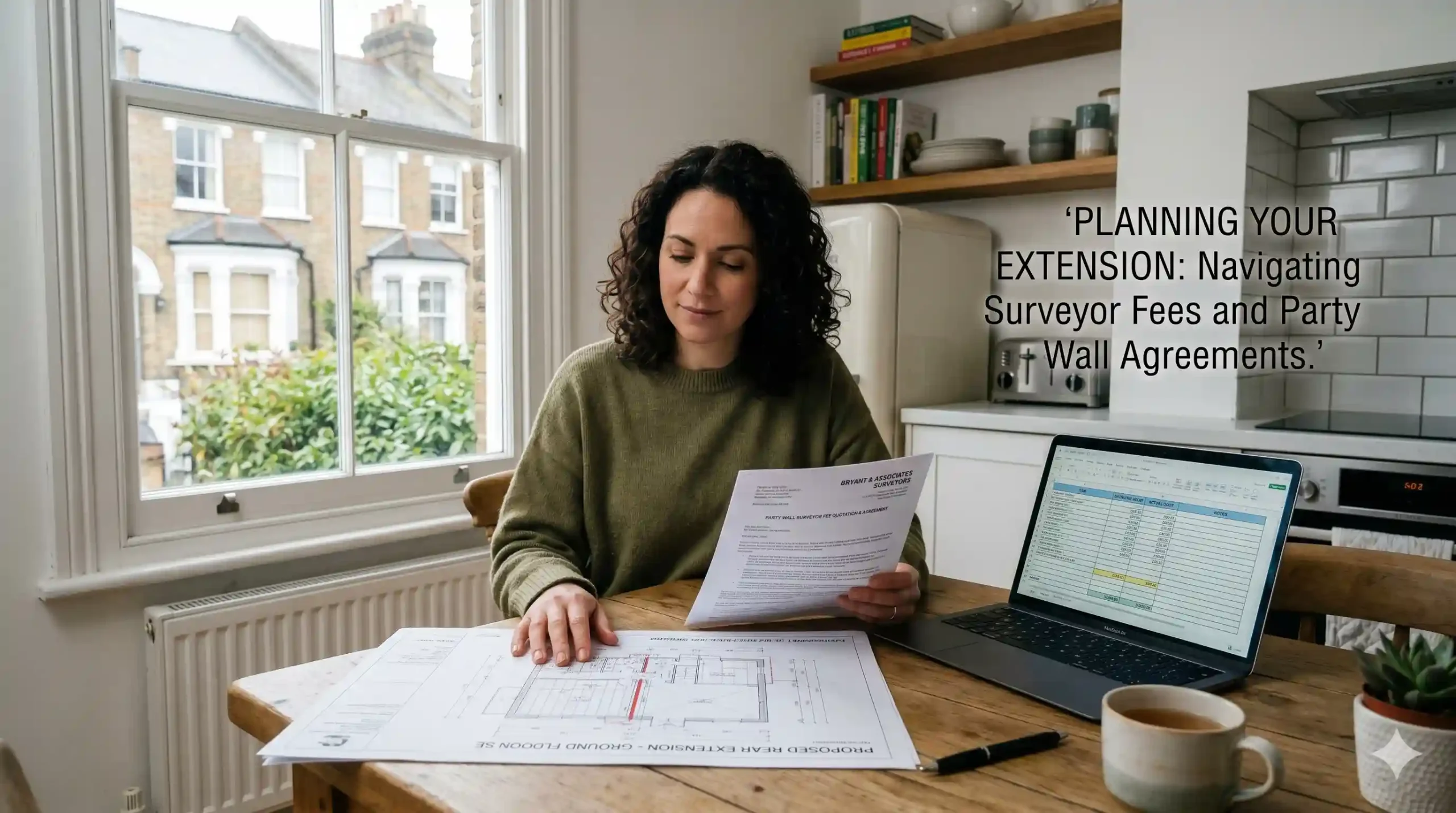
Planning a loft conversion, basement extension, or rear addition to your London home? You’ve probably heard whispers about “party wall costs” and felt that familiar knot of anxiety forming. How much will this actually set me back? Why does my neighbour’s surveyor send me invoices? And why does London seem more expensive than everywhere else?
Take a breath. You’re not alone in feeling overwhelmed by party wall costs. In our 15 years serving London property owners, the most common question we hear is: “How much is this going to cost me?” This guide will give you transparent, realistic answers—no hidden surprises, no sales pressure, just honest pricing information to help you budget confidently.
Quick Answer: Party wall agreement costs in London typically range from £700 to £2,500+, depending on project complexity, property type, and whether disputes arise. Most straightforward loft conversions or single-storey extensions settle at £1,200-£1,800 when neighbours cooperate. However, the final cost depends on several factors we’ll explore in detail below.
Understanding Party Wall Agreement Cost London: The Basics First
Before diving into specific numbers, let’s clarify what you’re actually paying for. Many property owners mistakenly believe party wall costs are a single fee, when in reality they’re made up of several distinct components.
What Is a Party Wall Agreement in London?
A party wall agreement is the formal documentation required under the Party Wall etc. Act 1996 when your building work affects a shared wall, boundary, or nearby structure belonging to your neighbour. It’s not optional—it’s a legal requirement that protects both you and your neighbour during construction.
The agreement outlines what work you can do, how it should be carried out, and what happens if damage occurs. Think of it as an insurance policy that protects everyone involved.
The Four Main Cost Components
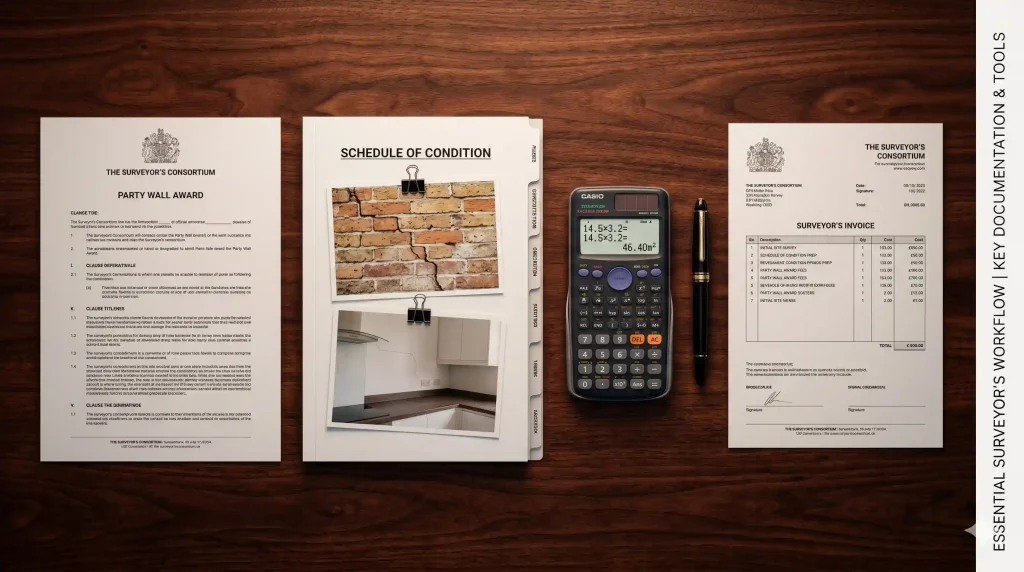
Surveyor Appointment Fees: This covers the professional who assesses your proposed work, inspects the neighbouring property, and drafts the formal award document.
Schedule of Condition Fee: A detailed photographic and written record of your neighbour’s property before work begins, protecting you from false damage claims later.
Award Drafting and Service: The creation and legal serving of the official Party Wall Award document that permits your work to proceed.
Dispute Resolution Costs: Additional fees if disagreements arise between surveyors or if matters escalate (hopefully rare, but important to understand).
Typical Party Wall Costs in London: Real Numbers
Let’s cut to the chase with actual figures you’ll encounter across different scenarios in London. These ranges reflect 2025 market rates based on our experience and industry standards.
Straightforward Projects (£700-£1,200)
These represent the simplest party wall matters where neighbours consent quickly and work is relatively minor.
Common examples include:
- Single-storey rear extensions not requiring excavation
- Loft conversions without major structural changes
- Internal alterations affecting a party wall (like removing a chimney breast)
- Minor repairs to existing party structures
At this cost level, you typically have a cooperative neighbour who agrees to use an Agreed Surveyor (one professional acting for both parties). The Schedule of Condition is straightforward, and the award drafts quickly without complications.
What this covers: Initial consultation, site inspection, Schedule of Condition for one adjoining property, award drafting and service, basic follow-up during construction.
Standard Residential Projects (£1,200-£2,000)
This bracket covers most typical London home improvements where neighbours appoint their own surveyor.
Common scenarios:
- Two-storey rear or side extensions
- Loft conversions with steel beam insertion
- Basement conversions without extensive underpinning
- Multiple notices required (combining different sections of the Act)
The increased cost reflects the “two surveyor” approach, where your neighbour exercises their right to appoint their own professional. Remember, under the Party Wall Act, you typically pay for both surveyors—your Building Owner’s surveyor and your neighbour’s Adjoining Owner’s surveyor.
What this covers: Full surveyor services for both parties, comprehensive Schedule of Condition, detailed award documentation, several site visits during construction, resolution of minor technical queries.
Complex Projects (£2,000-£3,500)
When projects involve significant structural work, multiple adjoining properties, or challenging site conditions, costs escalate accordingly.
Examples include:
- Basement extensions requiring underpinning of neighbouring foundations
- Large-scale excavations triggering the 6-metre rule (affecting multiple properties)
- Commercial conversions or mixed-use developments
- Work on terraced properties affecting both neighbours
- Projects in conservation areas with Listed Building considerations
What this covers: Extended surveyor involvement, multiple property inspections, complex structural calculations, detailed specifications for protective works, multiple site visits throughout construction, coordination between various professionals.
Dispute-Related Costs (£3,500-£10,000+)
When neighbours disagree fundamentally or disputes arise during construction, costs can spiral significantly. This is the scenario everyone hopes to avoid but needs to understand.
Dispute triggers include:
- Neighbours refusing reasonable access for inspections
- Disagreements about the extent of necessary works
- Damage claims during construction
- Surveyors unable to reach agreement (requiring Third Surveyor appointment)
- Legal proceedings if matters escalate beyond the Party Wall Act process
What this covers: Extended surveyor time, Third Surveyor fees (typically £2,000-£5,000 alone), additional site inspections, expert witness reports if needed, potentially legal fees if matters reach court.
The good news? According to our experience, approximately 85% of party wall matters resolve amicably without reaching dispute levels. Most neighbours understand their legal obligations and want a smooth process as much as you do.
Cost Breakdown: Where Does Your Money Actually Go?
Understanding exactly what you’re paying for helps demystify party wall costs and ensures you’re getting fair value. Here’s how typical fees break down in a standard £1,500 party wall matter.
Building Owner’s Surveyor Fees (£800-£1,000)
Your appointed surveyor handles the bulk of technical work:
Initial consultation and site assessment (10-15% of fee): Understanding your project scope, reviewing architectural plans, identifying which Party Wall Act sections apply, advising on notice timing.
Notice preparation and service (5-10% of fee): Drafting legally compliant notices, serving them correctly to all affected neighbours, managing the 14-day waiting period, fielding initial neighbour questions.
Schedule of Condition preparation (20-25% of fee): Comprehensive property inspection, detailed photography (typically 50-150 photos per property), written descriptions of existing conditions, noting any pre-existing defects or cracks.
Award drafting and finalization (25-30% of fee): Creating the legally binding document, specifying permitted works, setting out protective measures, defining dispute resolution procedures, incorporating surveyor agreements.
Construction monitoring (20-25% of fee): Mid-work inspections, responding to contractor queries, addressing neighbour concerns, verifying protective measures, documenting work progress.
Final inspection and sign-off (10-15% of fee): Post-construction property review, comparing against Schedule of Condition, confirming no actionable damage, issuing completion certificates.
Adjoining Owner’s Surveyor Fees (£500-£800)
Your neighbour appoints their own surveyor to protect their interests. Remember, you typically pay these fees too under the “Building Owner pays” principle of the Party Wall Act.
What the Adjoining Owner’s surveyor does: Reviews your proposed works from their client’s perspective, conducts independent property inspection, negotiates award terms, monitors your construction from a protective standpoint, represents neighbour’s interests if issues arise.
These fees are generally lower than Building Owner’s surveyor costs because the workload is less intensive. The Adjoining Owner’s surveyor reviews and responds rather than initiating and drafting.
Third Surveyor Selection Fee (Usually Nominal)
When appointing surveyors, both parties jointly agree on a Third Surveyor who would step in only if the two appointed surveyors cannot reach agreement. This initial selection typically adds £50-£150 to overall costs but is essential for dispute resolution procedures.
The Third Surveyor only becomes actively involved (and charges their full fee) if called upon to make a determination. This happens in less than 5% of cases.
Additional Disbursements (Variable)
Photography and printing: Professional documentation costs £50-£150 Postage and legal service: Recorded delivery, courier fees £30-£80 Technical drawings: If specifications need detailed illustration £100-£300 Expert consultations: Structural engineers if complex issues arise £200-£500
Factors That Increase Party Wall Costs in London
Not all party wall matters cost the same. Several factors can push your fees toward the higher end of typical ranges—or beyond.
Property Type and Configuration
Terraced properties naturally cost more because work often affects two neighbours simultaneously (one on each side). You’re essentially doubling many costs: two Schedules of Condition, two Adjoining Owner surveyors potentially, twice the coordination effort.
We recently worked on a mid-terrace loft conversion in Clapham, where the property owner needed party wall agreements with both neighbours. Total cost: £2,400 compared to £1,300 for a similar project on an end-terrace house.
Victorian and Edwardian properties often have complex party wall structures that require more detailed assessment. Original lime mortar, historic alterations, and previous undocumented works all demand additional surveyor time.
Basement flats involve vertical party wall considerations that complicate matters. Who owns which part of the structure? Are there multiple leaseholders? Is freeholder consent needed? These questions extend surveyor involvement.
Project Complexity and Scope
Structural alterations requiring steel beam insertion, significant load redistribution, or foundation work naturally demand more technical expertise and, therefore higher fees.
Excavation depth and proximity to neighbouring foundations directly impacts cost. Digging within three metres of a neighbour’s foundation triggers stricter requirements. Excavating within six metres while going deeper than the neighbouring foundation brings even more properties into scope.
A basement conversion we managed in Kensington required party wall agreements with five neighbouring properties due to the excavation depth and urban density. The project cost £8,500 in party wall fees alone—but this protected the Building Owner from potentially catastrophic damage claims worth hundreds of thousands.
Multiple notice types combining Section 1 (new building on boundary line), Section 2 (work to existing party structures), and Section 6 (excavation) notices all in one project increases surveyor work proportionally.
Neighbour Cooperation Levels
This factor dramatically influences final costs, yet it’s partially within your control through good communication.
Immediate consent with Agreed Surveyor represents the most cost-effective scenario. Your neighbour reviews the notice, agrees to the work, and accepts your offer to use a single surveyor acting impartially for both parties. This approach typically saves £400-£600 compared to the two-surveyor route.
Appointment of separate surveyor (standard procedure) is perfectly reasonable and your neighbour’s legal right. It increases costs but ensures independent professional advice—often leading to smoother overall outcomes.
Initial reluctance requiring extensive explanation extends timelines and surveyor hours. If your surveyor spends additional time meeting neighbours, explaining processes, or addressing concerns, expect fees to creep upward by £200-£400.
Active resistance or non-cooperation where neighbours ignore notices, refuse access, or raise objections to reasonable work pushes costs significantly higher. Surveyor time dealing with contentious matters bills at the same rate as technical work.
Geographic Location Within London
Yes, even within London, location affects party wall costs—though perhaps not as dramatically as you’d expect.
Central London (Westminster, Kensington & Chelsea, City of London) typically sees fees 10-20% higher than outer boroughs. Higher property values, more complex buildings, and experienced surveyors commanding premium rates all contribute.
Prime postcodes like SW3, SW7, W8, W11 often involve properties with significant value where thoroughness is paramount. Surveyors price accordingly for the increased liability and scrutiny.
Outer London boroughs (Havering, Bexley, Sutton) generally have more competitive pricing, partly due to simpler property types and less dense urban fabric meaning fewer adjoining owners.
That said, the differences are modest compared to other geographic cost variations. A £1,500 party wall matter in Wandsworth might cost £1,650 in Chelsea—annoying but not deal-breaking.
Who Pays What? Understanding the “Building Owner Pays” Principle
Here’s where party wall costs often cause confusion and frustration. Let’s clarify the financial responsibilities clearly.
The General Rule: Building Owner Bears the Cost
Under the Party Wall etc. Act 1996, the Building Owner (the person initiating the work) typically pays all reasonable party wall surveyor fees. This includes:
- Your own Building Owner surveyor’s fees
- Your neighbour’s Adjoining Owner surveyor’s fees
- Third Surveyor fees if required
- Reasonable disbursements for both surveyors
This might feel unfair—why should you pay for your neighbour’s professional? The logic is simple: you’re initiating work that requires the legal process. Your neighbour is entitled to independent professional advice to protect their property rights. It’s the cost of doing business under the Act.
What “Reasonable” Means in Practice
You’re not obligated to pay unlimited fees. The Act specifies “reasonable” costs, which means:
Market-appropriate rates: Surveyor fees should align with industry standards (typically £120-£180 per hour for qualified RICS professionals in London).
Work actually necessary: If an Adjoining Owner’s surveyor charges for five site visits when two were sufficient, you can challenge the reasonableness.
Proportionate to project scale: A simple single-storey extension shouldn’t generate £5,000 in surveyor fees unless extraordinary circumstances exist.
If you believe fees are unreasonable, you can challenge them through the dispute resolution process, but this is uncommon. Most RICS-qualified surveyors price fairly, understanding their fees are scrutinized.
Exceptions Where Costs Might Be Shared
Agreed repairs to party structures: If surveyors identify that a shared wall needs repair benefiting both properties, costs may be apportioned based on benefit received.
Special foundations consent: When your proposed special foundations benefit your neighbour (for example, by allowing future basement conversion), contribution toward costs might be negotiated.
Existing defects requiring remedy: If your neighbour’s property has pre-existing issues that your work would inadvertently improve, cost-sharing discussions sometimes occur.
Mutual excavation scenarios: Rare situations where both properties simultaneously undertake basement work can lead to shared surveyor costs by agreement.
Recovering Costs from Your Builder
While you ultimately pay party wall fees, many building contracts specify that contractors should factor these costs into their overall quote. Clarify upfront whether your builder’s quotation includes party wall matters or whether you’ll manage this separately.
Some contractors prefer to handle party wall processes themselves (adding the cost to their fee), while others expect you to manage surveyors directly. Ensure this is crystal clear before signing any building contract.
Hidden Costs and Unexpected Expenses to Watch For
Beyond the core surveyor fees, several additional costs can catch property owners off-guard. Being aware of these helps you budget more accurately.
Delay-Related Costs
Extended surveyor involvement beyond standard timelines: If your project suffers delays (planning issues, contractor problems, material shortages), your surveyors remain involved throughout. Most fee agreements cover a typical 6-12 month construction period. Beyond this, expect additional charges of £100-£200 per additional month.
Storage fees if work pauses: Party wall awards typically specify timeframes for work commencement and completion. Significant delays might require award variations, triggering additional surveyor fees of £300-£500.
Damage Remediation Costs
This is the big one that keeps property owners awake at night. While not technically part of party wall “agreement” costs, understanding potential damage liability is crucial.
Minor cosmetic damage: Small cracks, paint damage, or plaster imperfections discovered during construction monitoring typically cost £500-£2,000 to remedy.
Structural damage: More serious issues like foundation movement, significant cracking, or water ingress can run to £10,000-£50,000+ in extreme cases.
The Schedule of Condition protects you here. Without it, distinguishing pre-existing damage from construction-caused damage becomes nearly impossible, leaving you vulnerable to inflated claims.
Pro tip: Some property owners purchase specific Party Wall damage insurance (typically £200-£400 annually) to protect against worst-case scenarios. For major projects like basement excavations, this can provide peace of mind worth far more than its modest cost.
Multiple Property Complications
In dense London terraced streets, your project might affect more neighbours than initially obvious:
Party wall agreements needed with properties not directly adjoining: The six-metre excavation rule can pull in properties across rear gardens or even across narrow streets.
Leasehold complications: Flats require approaching both the immediate neighbour and potentially the freeholder, doubling administrative work.
Commercial ground floors in mixed-use buildings: Commercial tenants and landlords both have party wall rights, creating complex multi-party negotiations.
A recent project we handled in Islington—a relatively straightforward loft conversion—ultimately required party wall agreements with four separate parties due to the building’s leasehold structure and neighbouring commercial use. What the client budgeted at £1,200 ended up costing £3,100.
Post-Construction Follow-Up
Party wall obligations don’t end when construction finishes. Final inspections, comparison against Schedules of Condition, and formal sign-off all require surveyor time, typically included in initial fees but sometimes triggering top-up charges if work extends significantly beyond anticipated timescales.
Final inspection fees: Usually included but can be £200-£400 additional if work took much longer than planned.
Defects period monitoring: If your neighbour reports potential issues months after completion, surveyors investigate whether construction caused the problem. This can add £300-£600 to final costs.
How to Reduce Party Wall Costs (Without Cutting Corners)
Nobody wants to pay more than necessary, but cutting corners on party wall compliance is false economy that risks far greater costs later. Here are legitimate ways to minimize expenses.
Choose an Agreed Surveyor When Possible
If your neighbour is amenable, using a single Agreed Surveyor acting impartially for both parties can save £400-£800 compared to appointing separate professionals.
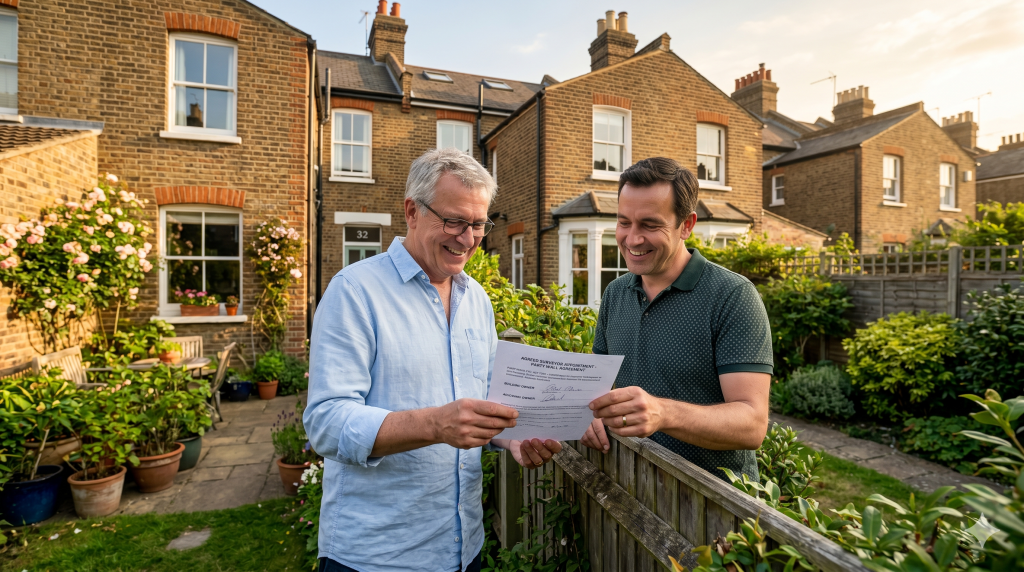
How to encourage this: Approach your neighbour early, explain the work clearly, emphasize the cost savings benefit them too (faster process, simpler communication), and offer a choice of two or three reputable surveyors they can research.
When this works best: Straightforward projects, good existing neighbour relationships, relatively minor work, properties in similar condition.
When separate surveyors make sense: Complex projects, basement excavations, neighbour anxiety about the work, properties with existing issues, higher-value properties where thoroughness outweighs cost savings.
Serve Notices Promptly and Correctly
DIY notice serving is legally permissible and saves professional fees—if done correctly. However, mistakes cause delays and potentially greater costs when surveyors must rectify invalid notices.
Cost of professional notice drafting and service: £150-£300 Cost of fixing invalid DIY notices: £400-£600+ (including delay costs)
Our honest assessment: If your project is straightforward and you’re confident following legal requirements precisely, DIY notice service can work. For anything complex, professional handling from the outset saves money overall.
Communicate Proactively With Neighbours
This cannot be overstated. The single biggest cost-control factor within your control is maintaining good neighbour relations.
Before formal notices: Knock on their door, explain your plans conversationally, show them drawings, answer questions, address concerns. Five minutes of friendly chat can save hundreds in reduced surveyor conflict-resolution time.
During the process: Keep neighbours informed about timelines, introduce your builder, provide contact details for site issues, be responsive to their concerns.
Throughout construction: Minimize disruption, respect agreed working hours, clean up shared areas, apologize for unavoidable noise or inconvenience.
We’ve observed that projects where Building Owners maintain excellent neighbour communication average 20-30% lower party wall costs than those where relationships are cool or hostile.
Bundle Multiple Projects Intelligently
If you’re planning several works over time (for example, loft conversion now, basement in two years), consider whether combining them into a single party wall process might work.
Potential savings: One comprehensive Schedule of Condition rather than two, single award covering all works, reduced overall surveyor hours.
Potential downsides: More complex award, longer initial timeline, locks you into work you might later decide against.
This strategy works best when projects are definitely happening within a reasonable timeframe and form logical phases of a single renovation vision.
Select Surveyors Wisely
Not all party wall surveyors charge identically. While the cheapest isn’t necessarily the best value, shopping around makes sense.
Reasonable rate ranges: £120-£180/hour for experienced RICS-qualified surveyors in London. Significantly below this raises competence concerns; significantly above should come with clear justification (highly specialized expertise, exceptional reputation).
Fixed-fee vs. hourly: Some surveyors offer fixed fees for straightforward projects, providing cost certainty. Others charge hourly, which can be cost-effective for genuinely simple matters but risks overruns on complex projects.
Questions to ask before appointing:
- What’s your typical fee for projects similar to mine?
- Is this a fixed fee or hourly? What assumptions underpin your quote?
- What’s included vs. what triggers additional charges?
- How many site visits do you anticipate?
- What’s your experience with [specific project type] in [your area]?
Getting quotes from three surveyors gives you market awareness without excessive research time.
Comparing London Party Wall Costs to the Rest of the UK
You’ve probably heard that “everything costs more in London”—but how much more for party wall matters specifically?
The London Premium: Real but Modest
Party wall surveyor fees in London typically run 20-40% higher than equivalent services in regional UK cities like Manchester, Birmingham, or Leeds.
Typical single-storey extension party wall costs:
- London: £1,200-£1,800
- Major regional cities: £900-£1,400
- Market towns and rural areas: £700-£1,100
Why London Costs More
Higher property values equal higher liability: Surveyors working on multi-million-pound London properties carry greater professional indemnity risk, reflected in their pricing.
Complex building stock: London’s dense Victorian and Edwardian terraced streets create more intricate party wall situations than newer, more spacious developments elsewhere.
Premium professional rates: Qualified RICS surveyors in London charge more across all services, not just party wall work, reflecting higher operating costs and market positioning.
Greater demand intensity: London’s construction boom (particularly conversions and extensions) creates sustained demand for party wall services, supporting premium pricing.
More adjoining properties: Urban density means excavation rules frequently trigger agreements with multiple neighbours, multiplying costs.
Where London Costs Actually Save Money
Ironically, London’s party wall premium sometimes delivers better value than cheaper alternatives elsewhere:
Specialist expertise: London surveyors handle vastly more party wall cases, developing deep expertise. A complex basement excavation matter benefits from this experience.
Faster turnarounds: High-volume London practices often process straightforward cases more efficiently, reducing total timeline and associated project holding costs.
Better dispute resolution: Experienced London surveyors navigate neighbour conflicts more effectively, potentially avoiding escalation that would cost far more than any initial fee premium.
Consider total project value, not just party wall costs in isolation. On a £150,000 loft conversion, paying £1,600 rather than £1,200 for party wall services represents less than 0.3% difference in overall budget—negligible compared to peace-of-mind benefits from expert handling.
Real-World Cost Examples from Recent London Projects
Nothing beats concrete examples to understand what you’ll actually pay. Here are anonymized cases from our recent work across London.
Case Study 1: Straightforward Loft Conversion, Wandsworth
Project: Hip-to-gable loft conversion with dormer window, single party wall affected Property type: End-terrace Victorian house Neighbour response: Consented within 14 days, appointed own surveyor Total party wall cost: £1,450
Breakdown:
- Building Owner’s surveyor: £900
- Adjoining Owner’s surveyor: £500
- Schedule of Condition (one property): Included
- Timeline: Notice to award completion: 6 weeks
- Outcome: Smooth process, no disputes, minor cosmetic damage rectified for £300
This represents the ideal scenario—cooperative neighbour, straightforward work, experienced professionals, reasonable costs.
Case Study 2: Basement Conversion with Complications, Kensington
Project: Full basement excavation under existing house with underpinning Property type: Mid-terrace period property in conservation area Neighbour response: Both neighbours initially concerned, one appointed surveyor, other needed extensive reassurance Total party wall cost: £4,200
Breakdown:
- Building Owner’s surveyor: £2,400 (extended involvement due to structural complexity)
- Two Adjoining Owner surveyors: £1,400 combined
- Additional structural engineer consultation: £400
- Timeline: Notice to award completion: 14 weeks
- Outcome: Initial anxiety resolved through detailed Schedule of Condition and protective measures specification, no damage occurred
The higher costs reflected genuinely complex work requiring specialist input, multiple properties, and reassurance time—but prevented potentially catastrophic damage disputes.
Case Study 3: Rear Extension Dispute, Hackney
Project: Two-storey rear extension Property type: Terraced house Neighbour response: Fundamental objection to project scale, surveyors disagreed on award terms Total party wall cost: £6,800
Breakdown:
- Building Owner’s surveyor: £3,200 (extensive negotiation, multiple revisions)
- Adjoining Owner’s surveyor: £1,800
- Third Surveyor fee: £1,600 (had to make binding determination)
- Additional legal consultation: £200
- Timeline: Notice to final award: 26 weeks
- Outcome: Third Surveyor’s determination allowed work to proceed with additional protective measures, relationships strained but legal process worked
This case shows what dispute escalation costs—but also that the Party Wall Act system functions even when relationships break down, ultimately protecting both parties’ interests.
Case Study 4: Multiple Properties, Tower Hamlets
Project: Loft conversion in mid-terrace property Property type: Victorian terrace with small rear gardens Neighbour response: Both directly adjoining neighbours cooperative, but excavation depth triggered 6-metre rule affecting two rear neighbours Total party wall cost: £2,900
Breakdown:
- Building Owner’s surveyor: £1,600 (managing four separate agreements)
- Four Adjoining Owner surveyors: £1,100 combined (two neighbours used Agreed Surveyor approach)
- Four Schedules of Condition: Included
- Timeline: Notice to final award: 10 weeks
- Outcome: Efficient process despite multiple parties, exemplary coordination between surveyors
This demonstrates how urban density increases costs but doesn’t necessarily create problems if professionally managed.
Getting Accurate Quotes for Your Specific Project
Armed with general cost information, how do you get precise figures for your situation?
Information Surveyors Need for Accurate Quotes
Architectural drawings: Even preliminary sketches help surveyors understand work scope.
Property type and age: Victorian terraced houses differ significantly from 1960s semi-detached properties.
Specific work planned: “Loft conversion” can mean vastly different things; specify structural beams, party wall work, excavation depth.
Number of affected neighbours: How many properties share walls or fall within excavation zones?
Existing neighbour relationships: Are they generally cooperative? Have previous issues existed?
Project timeline: When do you plan to serve notices and commence work?
Any known complications: Structural issues, previous disputes, conservation area restrictions?
Questions to Ask Potential Surveyors
Beyond cost, assess overall suitability:
- How many similar projects have you handled in [your borough]? Local experience matters.
- What’s your typical timeline from instruction to award completion? Affects overall project schedule.
- How do you charge—fixed fee or hourly? Understand cost certainty vs. flexibility.
- What’s included in your quote? How many site visits, what triggers additional fees?
- How do you handle disputes if they arise? Assessment of problem-solving approach.
- Can you provide references from recent clients? Verification of service quality.
- What’s your response time for queries during construction? Ongoing support matters.
- Are you RICS-qualified? Professional standards and insurance protection.
Red Flags to Watch For
Quotes significantly below market rates: Raises concerns about experience, corners being cut, or hidden charges.
Reluctance to provide detailed fee breakdowns: Transparency matters in professional services.
Promises that “your neighbour won’t need their own surveyor”: No surveyor can guarantee another party’s decisions.
Aggressive sales tactics or pressure to appoint immediately: Professional surveyors don’t need hard-sell approaches.
Claims of “special relationships” with council or planning: Party wall process is independent of local authority.
Unclear complaints procedures: RICS members must have formal complaints processes; ask about them.
Is It Worth Trying to Save Money by Going DIY?
The temptation to self-manage party wall notices and save £700-£1,500+ is understandable. Let’s honestly assess when this might work and when it’s false economy.
When DIY Notice Serving Might Work
Genuinely simple projects: Minor internal work like removing a chimney breast, where structural implications are minimal and neighbours likely cooperative.
Excellent existing neighbour relationships: If you’re friends with adjoining property owners and they trust your judgment, informal discussions might lead to easy agreement.
You’re professionally qualified: Architects, engineers, or construction professionals with understanding of the Party Wall Act requirements.
Very tight budgets: If professional fees genuinely make your project financially unviable (though question whether proceeding is wise if margins are that tight).
Why DIY Usually Costs More Long-Term
Invalid notices cause delays: The most common DIY mistake is serving notices incorrectly—wrong information, wrong timings, wrong recipients. Fixing this after 14 days have passed means restarting, delaying your project by a month or more. Time is money in construction.
You don’t know what you don’t know: Surveyors identify technical issues non-specialists miss. That “simple rear extension” might trigger Section 6 excavation provisions you didn’t realize applied.
Neighbour relationships suffer: Professional surveyors absorb neighbour anxiety and frustration that might otherwise poison your relationship. Worth the fee to preserve long-term neighbour harmony.
Liability exposure increases: Without a comprehensive Schedule of Condition prepared by a professional, you’re vulnerable to inflated or false damage claims. A single spurious claim of £5,000 makes the £1,200 surveyor fee look like a bargain.
Award quality matters: A properly drafted party wall award protects you legally if disputes arise later. DIY awards often contain ambiguities or omissions that cause problems.
The Hybrid Approach: When It Works
Some property owners successfully handle initial neighbour discussions and serve notices themselves, then engage surveyors only if neighbours dissent or complications arise.
Potential savings: £300-£500 in initial consultation and notice drafting fees.
Requirements for success: Strong understanding of the Act, confidence in notice drafting, excellent neighbour communication, acceptance that you might need professionals later.
Our honest assessment: For most property owners, engaging surveyors from the outset costs less overall when you factor in time, stress, relationships, and risk. Party wall fees represent typically 1-2% of total project costs—not the place to seek savings.
What Happens If You Try to Avoid Party Wall Costs Entirely?
Some property owners, frustrated by party wall costs, consider skipping the process altogether. Understanding consequences helps explain why compliance is non-negotiable.
Legal Consequences
Injunctions stopping your work: Your neighbour can seek a court injunction halting construction immediately. Legal costs for this typically start at £5,000-£10,000.
Mandatory compliance orders: Courts can order you to properly comply with the Party Wall Act retroactively, often with tight deadlines that disrupt your project.
Damage liability without limits: Without a Schedule of Condition proving pre-existing conditions, you’re vulnerable to any damage claim. The burden of proof shifts to you to demonstrate you didn’t cause problems.
Retrospective Schedule of Condition impossibility: Once work commences without proper process, creating a protective Schedule of Condition becomes impossible, leaving you exposed.
Financial Consequences
Forced work stoppages: Even brief construction stops cost money. Contractors still charge for site setup, storage, demobilization, and remobilization—easily £2,000-£5,000.
Extended project timelines: Legal proceedings add months to projects. Factor in extended temporary accommodation costs, bridging loan interest, opportunity costs of delayed property use.
Inflated damage claims: Without professional documentation, defending against exaggerated claims becomes nearly impossible. We’ve seen £500 of legitimate damage claimed at £8,000+ when proper processes weren’t followed.
Contractor relationship damage: Builders expect proper party wall compliance. Being forced to stop work strains relationships, potentially affecting their future willingness to work with you.
Mortgage and insurance complications: Lenders and insurers take Party Wall Act compliance seriously. Non-compliance can affect mortgage terms and void insurance coverage.
Relationship Consequences
Beyond legal and financial costs, attempting to avoid party wall processes destroys neighbour relationships, sometimes irreparably. You’ll live next to these people for years—is saving £1,500 worth creating an enemy?
Budgeting for Party Wall Costs in Your Overall Project
Integrating party wall expenses into your project budget ensures no nasty financial surprises.
When to Budget Party Wall Costs
Very early in planning: Factor these costs into your initial feasibility assessment, ideally before even engaging architects.
Rule of thumb: Budget 1-2% of total project costs for party wall matters on straightforward projects, 2-4% for complex works.
Examples:
- £60,000 loft conversion → budget £1,200-£2,400 for party wall
- £150,000 basement extension → budget £3,000-£6,000 for party wall
- £30,000 single-storey extension → budget £600-£1,200 for party wall
Contingency Approach
Since party wall costs vary based on neighbour cooperation and complications, smart budgeting includes contingency:
Baseline budget: Expected cost assuming standard process and reasonable cooperation.
Contingency (additional 50%): Covers potential
disputes, additional site visits, or complications.
Example: If your surveyor quotes £1,200 as baseline, budget £1,800 total with £600 contingency.
If the contingency isn’t needed, it becomes a pleasant surplus in your overall project budget. If complications arise, you’re protected rather than scrambling for additional funds mid-project.
Including in Builder Quotes
Clarify with your contractor whether their quote includes party wall costs or whether you’ll handle this separately. Most experienced London builders prefer property owners to manage surveyors directly, as it removes complexity from their pricing and liability.
Get it in writing: Your building contract should explicitly state whether party wall matters are included or excluded from the contractor’s scope.
Timing implications: Party wall awards must be in place before starting work. Factor this into your project timeline and contractor scheduling.
Financing Party Wall Costs: Payment Options and Timing
Understanding when and how you’ll need to pay helps with cash flow management throughout your project.
Typical Payment Structures
Initial instruction fee (20-30% of total): Many surveyors request a deposit when appointed, covering initial consultation and notice preparation. For a £1,500 total fee, expect £300-£450 upfront.
Interim invoice at award completion (40-50%): Once the party wall award is drafted and agreed, surveyors typically invoice for the bulk of their work. Continuing our example, this might be £600-£750.
Final invoice post-construction (20-30%): After final inspections and sign-off confirming no actionable damage, surveyors submit their closing invoice. This covers construction monitoring, final visits, and award closure. In our example: £450-£600.
Single payment options: Some surveyors offer small discounts (typically 5-10%) for payment in full upon instruction. If cash flow permits, this can save £50-£150 on a typical matter.
Your Neighbour’s Surveyor Fees
Remember, you’ll also receive invoices from the Adjoining Owner’s surveyor(s). Payment timing and structure varies:
Some invoice through your surveyor: The two surveyors coordinate, and your Building Owner surveyor presents consolidated invoices. This simplifies administration.
Others invoice you directly: You receive separate invoices from your neighbour’s surveyor, payable on their terms (typically 30 days from invoice date).
Award terms specify timing: The party wall award itself usually addresses fee payment obligations, providing clarity on timing and amounts.
What If You Can’t Afford Party Wall Costs?
If party wall fees genuinely strain your budget, consider these options:
Delay your project: Unglamorous advice, but starting a major project without adequate financial reserves is risky. Save additional funds before proceeding.
Reduce project scope: A smaller extension or simpler loft conversion might reduce both construction costs and party wall complexity.
Negotiate payment plans: Some surveyors accommodate payment plans for financial hardship cases, though this isn’t standard practice.
Consider agreed surveyor approach: If your neighbour agrees, using a single surveyor saves 30-40% typically.
Home improvement loans: If borrowing for your construction project, include party wall costs in your loan amount rather than treating them as a separate unexpected expense.
What doesn’t work: Attempting to avoid party wall compliance altogether. As discussed earlier, this creates far greater costs through legal complications, damage claims, and work stoppages.
Insurance Considerations: Protecting Yourself Beyond Party Wall Awards
While party wall agreements provide legal framework and protection, additional insurance can guard against worst-case scenarios.
Your Existing Home Insurance
Most standard home insurance policies do not cover party wall damage claims or disputes. Check your policy carefully—you’ll likely find exclusions for:
- Damage to neighbouring properties caused by your construction
- Legal costs defending party wall disputes
- Party wall surveyor fees
Some insurers offer construction project add-ons, but coverage varies significantly. Review this with your broker before work commences.
Specialist Party Wall Insurance
Several insurers now offer specific party wall damage cover, typically costing £200-£500 annually depending on project value.
What it covers:
- Damage to neighbouring properties proven to result from your work
- Legal costs defending damage claims
- Surveyor fees for damage assessment and remediation specification
- Sometimes includes party wall dispute resolution costs
When it’s worth considering:
- Basement excavations or underpinning (high-risk work)
- Projects affecting multiple adjoining properties
- High-value neighbouring properties (£2m+)
- Work on properties with known structural issues
- Situations where neighbour relationships are already strained
What it doesn’t cover:
- Damage you cause intentionally or through gross negligence
- Routine party wall surveyor fees (the normal costs discussed throughout this guide)
- Work undertaken without proper party wall awards
- Claims for issues that existed before construction
For straightforward loft conversions or small extensions on properties in good condition with cooperative neighbours, this insurance is probably unnecessary. Your Schedule of Condition and careful contractor selection provide adequate protection.
For basement excavations in terraced streets with high-value properties, the peace of mind might well justify the modest premium.
Regional Cost Variations Within London: Does Your Borough Matter?
We’ve mentioned that London costs more than other UK regions, but does location within London significantly affect party wall costs?
The Borough Effect: Modest but Real
Party wall surveyor fees vary approximately 10-20% between London’s most and least expensive boroughs.
Premium pricing areas:
- Westminster (W1, SW1)
- Kensington & Chelsea (SW3, SW5, SW7, W8, W11)
- City of London (EC postcodes)
- Camden (parts of NW1, NW3)
- Richmond (TW9, TW10)
Standard pricing areas:
- Most of inner London
- Wandsworth, Lambeth, Southwark
- Islington, Hackney, Tower Hamlets
- Hammersmith & Fulham, Brent
More competitive pricing areas:
- Outer London boroughs
- Croydon, Bromley, Havering, Bexley
- Barking & Dagenham, Sutton
Why the variation?
Property values drive liability concerns: Surveyors working on £5m houses in Chelsea face greater professional indemnity exposure than on £500k houses in Barking. Fees reflect this risk.
Complexity of building stock: Prime central areas predominantly feature period properties with intricate party wall configurations requiring greater expertise.
Market positioning: Surveyors specializing in high-end areas often position as premium services, pricing accordingly.
Competition levels: More surveyors operate in high-volume areas like Wandsworth or Hackney, creating competitive pricing pressure.
Practical Impact
For a standard two-storey extension party wall matter:
- Westminster/Kensington: £1,800-£2,200
- Wandsworth/Islington: £1,400-£1,800
- Croydon/Havering: £1,100-£1,500
The differences matter but aren’t dramatic. Location should influence your budget expectations but needn’t drive surveyor selection. Expertise, responsiveness, and local knowledge matter more than saving £200 by choosing someone unfamiliar with your area.
The True Cost of Cheap Party Wall Services
We’ve focused on typical and reasonable costs, but it’s worth addressing the bottom end of the market—ultra-cheap party wall services advertising fees well below industry norms.
Red Flags in Budget Offerings
Surveyors quoting £400-£600 total for standard projects: While tempting, this pricing rarely covers proper service. Question what’s being cut.
Online-only services with no site visits: Some providers offer document-only services without inspecting properties. This defeats the core purpose of party wall protection.
Non-RICS qualified individuals: The Party Wall Act doesn’t legally require RICS membership, so some practitioners operate without professional qualifications. This removes important consumer protections.
Templated awards with minimal customization: Generic documents that don’t address your specific project circumstances provide weak protection if disputes arise.
Why Proper Service Costs What It Does
Consider what’s involved in competent party wall surveying:
Professional indemnity insurance: RICS surveyors carry substantial PI cover (typically £1m-£5m), costing thousands annually. This protects you if professional errors occur.
Continuing professional development: Maintaining expertise requires ongoing education, training, and industry involvement.
Proper site inspections: Thorough Schedule of Condition preparation requires 2-4 hours on-site per property, plus travel time across London.
Technical expertise: Assessing structural implications, specifying protective measures, and identifying potential issues demands genuine engineering knowledge.
Professional overheads: Office costs, software subscriptions, professional memberships, and administrative support all factor into sustainable pricing.
Time investment: A straightforward party wall matter typically involves 8-15 hours of qualified surveyor time. At appropriate professional rates (£120-£180/hour), this mathematically produces the £1,000-£2,500 range we’ve discussed.
The Penny-Wise, Pound-Foolish Reality
Choosing cut-price party wall services to save £500 can easily cost you £5,000+ when:
Inadequate Schedules of Condition leave you vulnerable to inflated damage claims you can’t defend against.
Template awards contain ambiguities or omissions that lead to disputes during construction.
Unqualified advisors miss technical issues that proper surveyors would identify and address.
No professional indemnity insurance exists if things go wrong and you need to recover losses from professional errors.
Neighbours lose confidence in the process, leading to disputes that could have been avoided through proper professional handling.
Party wall costs represent typically 1-2% of your total project budget. This is not the place to economize aggressively. Proper professional service provides value far exceeding its modest cost.
Common Myths About Party Wall Costs Debunked
Let’s address persistent misconceptions that cause confusion and poor decision-making.
Myth 1: “My Builder Says Party Wall Agreements Aren’t Necessary”
Reality: Many builders want to avoid party wall processes because they add timeline and complexity. Some genuinely don’t understand the legal requirements. Others prioritize quick project starts over proper compliance.
The Party Wall etc. Act 1996 isn’t optional for work it covers. Your builder’s opinion doesn’t override legal requirements. If work affects a party wall, boundary, or involves excavation near neighbouring foundations, the Act applies regardless of what your contractor prefers.
Myth 2: “If My Neighbour Agrees Verbally, We Don’t Need Formal Process”
Reality: Verbal agreement, however enthusiastic, doesn’t satisfy Party Wall Act requirements. The Act specifies written notices and formal responses within defined timeframes.
Verbal agreements evaporate when damage occurs or relationships sour. We’ve seen countless cases where neighbours who were “completely fine with it” became hostile when cracks appeared or noise exceeded expectations. Without proper documentation, you’re legally and financially exposed.
Myth 3: “Party Wall Costs Are Just Surveyor Fees I Can Negotiate Down”
Reality: While surveyor fees form the core cost, party wall expenses extend to disbursements, potential damage remediation, insurance considerations, and opportunity costs from timeline extensions.
Moreover, attempting to aggressively negotiate professional fees often backfires. Would you want your surgeon focused on cost-cutting rather than quality? Surveyors quoting at the low end of reasonable rates are perfectly fine; those significantly below market norms warrant caution.
Myth 4: “Expensive Surveyors Deliver Better Outcomes”
Reality: While cheap services raise concerns, expensive doesn’t automatically mean superior. The relationship between cost and quality is nuanced.
The £180/hour surveyor isn’t necessarily better than the £130/hour colleague. Experience, local knowledge, responsiveness, and professional approach matter more than hourly rates. Sometimes premium pricing reflects expertise; sometimes it’s just market positioning.
Check qualifications (RICS membership), experience (years practicing, number of similar projects), and references (recent client feedback) rather than using price as a quality proxy.
Myth 5: “London Party Wall Costs Are a Rip-Off”
Reality: While London costs more, this reflects legitimate factors: higher property values, greater liability exposure, complex building stock, premium professional rates across all services, and intense demand.
Compare party wall costs to other professional services. In London, hiring a solicitor costs £200-£400/hour, architects charge £80-£150/hour, and structural engineers bill £100-£180/hour. Party wall surveyors at £120-£180/hour align with comparable professional services.
The Act’s requirement that Building Owners pay both surveyors can feel unfair, but the system balances power between parties initiating work and those affected by it. Without this provision, adjoining owners would struggle to obtain independent professional advice, weakening their protection.
How Party Wall Costs Compare to Other Project Expenses
Context helps assessment. Where do party wall costs sit within your overall project budget?
Typical Extension Project Budget Breakdown
Let’s examine a £100,000 rear extension in London:
Construction costs (65-70%): £65,000-£70,000
- Main contractor fees
- Materials and labour
- Site preparation and clearance
Professional fees (10-15%): £10,000-£15,000
- Architect design fees: £5,000-£8,000
- Structural engineer: £2,000-£3,000
- Building Control or Approved Inspector: £1,000-£1,500
- Party wall surveyor: £1,500-£2,000
- Project management (if separate): £1,000-£2,000
Planning and permissions (1-2%): £1,000-£2,000
- Planning application fees
- Planning consultant if needed
Contingency (10-15%): £10,000-£15,000
- Unforeseen complications
- Design changes during construction
- Material price fluctuations
Finishes and fixtures (10-15%): £10,000-£15,000
- Kitchen/bathroom fittings
- Flooring, decoration
- Electrical fixtures, heating
In this context, party wall costs represent approximately 1.5-2% of the total project—significant enough to budget properly, but modest compared to construction costs or even architectural fees.
The Insurance Comparison
Party wall costs are comparable to other risk-mitigation expenses:
Buildings insurance during construction: £500-£1,000 annually Contractor’s all-risk insurance: £800-£1,500 Party wall surveyor fees: £1,500-£2,000 Professional indemnity (architect/engineer): Built into their fees
All protect against risks. Party wall fees specifically guard against neighbour disputes and damage claims—risks that could derail your entire project financially and legally.
Return on Investment Perspective
Consider party wall costs as insurance premium rather than pure expense. What are you buying for £1,500?
Protection against damage claims potentially worth £10,000-£100,000+ Legal compliance preventing injunctions costing £5,000-£20,000 Professional guidance reducing costly mistakes Neighbour relationship preservation (valuable but hard to quantify) Peace of mind throughout construction Smooth project progression without legal interruptions
Viewed this way, proper party wall compliance delivers enormous value relative to its modest cost. It’s one of the highest-ROI expenses in your project budget.
Future-Proofing: How Party Wall Costs Might Change
Understanding potential future changes helps long-term planning, especially if you’re considering multiple projects over coming years.
Potential Regulatory Changes
The Party Wall etc. Act 1996 hasn’t been substantially amended since inception, but discussions occasionally surface about modernization:
Digital notice service: Currently, notices must be served in writing (typically post or hand delivery). Future amendments might permit email or app-based service, potentially reducing administrative costs by £50-£100 per notice.
Standardized fee schedules: Some advocate for regulated fee scales similar to conveyancing. This could increase cost predictability but might also remove competitive market pressure that currently moderates costs.
Mandatory qualifications: Requiring party wall practitioners to hold specific qualifications (currently optional) could raise service quality but might also reduce competition and increase costs.
Alternative dispute resolution emphasis: Greater focus on mediation before Third Surveyor referrals might reduce dispute costs but add process layers.
None of these changes appear imminent. The Act functions reasonably well, and parliamentary time for non-urgent reforms is scarce.
Market Forces Likely to Affect Costs
Increased demand sustains pricing: London’s construction boom shows no signs of abating. Strong demand for party wall services supports current pricing levels and could drive modest increases.
Technology efficiencies might reduce costs: Digital photography, automated award drafting templates, and scheduling software could reduce surveyor time investment by 10-20%, potentially translating to modest fee reductions.
Professional indemnity insurance costs: If PI premiums rise due to increased claims, surveyors pass these costs to clients through higher fees.
General inflation: Assuming 2-3% annual inflation, today’s £1,500 party wall cost might be £1,600-£1,650 in three years simply due to general price increases.
Brexit impacts on construction sector: Labour shortages and material costs affecting the broader construction industry have minimal direct impact on party wall surveyor fees, which are primarily professional time costs.
Planning for Multiple Projects
If you’re planning several works over 5-10 years, budget assuming modest cost increases:
Year 1 (2025): Current costs apply Year 3-4 (2027-2028): Add 5-8% to current figures Year 5+ (2030+): Add 10-15% to current figures
This conservative approach ensures you’re not caught short by gradual cost increases.
Making the Final Decision: When to Instruct Party Wall Surveyors
You understand the costs, the process, and the protections. When exactly should you engage professionals?
The Ideal Timeline
6-8 weeks before planned construction start: This is optimal timing. It allows:
- Initial surveyor consultation and project assessment
- Notice preparation and service to neighbours
- 14-day neighbour response period
- Award negotiation and finalization (typically 2-4 weeks)
- Buffer for any minor complications
3-4 months before (better for complex projects): Basement excavations, work affecting multiple properties, or projects where neighbour complications seem likely benefit from extended timelines.
Earlier still (before finalizing designs): If you’re in the architectural design phase, preliminary party wall consultation can identify potential issues that might inform design decisions. This consultation often costs £150-£300 but can save thousands by avoiding problematic design elements.
Red Flag: Already Started Work
If you’ve commenced construction without party wall compliance, engage surveyors immediately. Yes, it’s embarrassing and complicates matters, but:
Immediate engagement minimizes additional costs and legal exposure Surveyors can advise on damage control and process rectification Stop work temporarily while proper processes complete (painful but necessary) Courts view good-faith compliance efforts more favorably than deliberate disregard
Questions to Resolve Before Instructing
Before engaging surveyors, clarify:
- Are my plans finalized? Changing designs mid-process can require notice re-serving.
- Have I checked planning permission status? While separate from party wall process, you need both.
- Have I chosen my builder? Contractor cooperation with party wall requirements matters.
- Do I understand my budget including party wall costs? Ensure adequate funds exist.
- Have I researched 2-3 potential surveyors? Compare qualifications, experience, and pricing.
- Have I informally approached neighbours? Early positive communication sets the tone.
The Bottom Line: What You Should Actually Budget for London Party Wall Costs in 2025
After this comprehensive exploration, what should you realistically budget for your party wall requirements in London this year?
Conservative Budgeting Framework
Straightforward single-project scenarios:
- Single-storey extension, one affected property, cooperative neighbour: £1,200-£1,600
- Loft conversion, one party wall, standard process: £1,400-£1,800
- Two-storey extension, standard terraced property: £1,600-£2,200
Complex scenarios:
- Basement excavation, terraced property (2 direct neighbours): £2,500-£4,000
- Multiple properties affected by excavation rules: £2,000-£3,500
- Commercial elements or leasehold complications: £2,500-£4,500
Dispute scenarios (hopefully avoided):
- Initial resistance but resolved through process: Add £500-£1,500 to above figures
- Formal dispute requiring Third Surveyor: Add £2,000-£4,000 to above figures
Add contingency of 30-50% to your baseline estimate for unexpected complications, extended timelines, or minor disputes.
What This Buys You
For these costs, you receive:
✓ Legal compliance with Party Wall etc. Act 1996 ✓ Professional surveyor assessment of your project ✓ Comprehensive Schedule of Condition protecting against false damage claims ✓ Formal award permitting your work to proceed ✓ Construction monitoring and technical guidance ✓ Dispute resolution mechanism if needed ✓ Professional indemnity insurance protection ✓ Peace of mind throughout your project ✓ Preservation of neighbour relationships through professional mediation
Take Action: Your Next Steps
You’re now equipped with comprehensive understanding of London party wall costs. Here’s how to proceed:
Immediate Actions (This Week)
- Review your project plans and identify which Party Wall Act sections apply to your work.
- Calculate realistic budget using the frameworks in this guide, including appropriate contingency.
- Research 2-3 qualified surveyors in your area—check RICS membership, read reviews, compare credentials.
- Request initial quotes providing detailed project information for accurate estimates.
- Informally approach neighbours if you haven’t already—friendly early communication prevents later problems.
Before Instructing Surveyors (Next 1-2 Weeks)
- Finalize your architectural plans—changing designs mid-process wastes time and money.
- Clarify with your builder whether they handle party wall matters or expect you to manage this.
- Verify planning permission status—ensure you’re legally permitted to do the work itself.
- Review your project timeline—allow 6-8 weeks minimum for party wall process.
- Check insurance coverage—understand what your existing policies cover (or don’t).
When Instructing (Before Construction)
- Appoint your surveyor at least 6-8 weeks before intended construction start.
- Provide complete project information—plans, structural drawings, contractor details.
- Coordinate with your builder—ensure they understand party wall requirements and timing.
- Maintain neighbour communication—keep them informed even after formal processes begin.
- Budget for final costs—ensure funds available throughout process, not just at start.
Still Have Questions?
Party wall costs and processes can feel overwhelming, especially when you’re juggling design decisions, builder quotes, planning applications, and the stress of a major home improvement project.
You don’t need to figure this out alone.
Get Expert Advice Without Obligation
Related Links:
Single Storey Extension Party Wall Guide London + England and Wales
Mansard Roof Conversion Party Wall Process (London Guide)
Kitchen Extension Party Wall Requirements in London
Party Wall Surveyor in Newham: East London Specialist
DIY Party Wall Notice: Can You Self Serve or Need a Surveyor?